Route 66: The First 100 Years

Route 66: The First 100 Years
By Jim Ross and Shellee Graham
St. Louis: Reedy Press, 2025
Hardcover, 208, $42

Reviewed by Paul Sherman

Is Route 66 cool again?

The winding Chicago-to-Santa-Monica asphalt passage that brought so many Americans west and fueled so much midcentury pop culture, including a homonymous popular song and TV series, has enjoyed numerous post-heyday stages.

“America’s Main Street” has moved through replacement by wider, straighter Interstate highways in the 1960s and 1970s; decertification by state and federal highway authorities; decay and disregard; rediscovery and a push for preservation in the 1990s and 2000s; and the ho-hum quality that eventually set in, when an imitation Route 66 shield sign in a retro restaurant or other business became as clichéd as airbrushed illustrations of Elvis, Marilyn, or James Dean.

Petaluma Vintage Signs Guidebook

Petaluma Vintage Signs GuidebookPetaluma Vintage Signs Guidebook
By Katherine J. Rinehart, Al Barna, and Randall Ann Homan
San Francisco: Giant Orange Press, 2025
Softcover, 28, $10 plus shipping at https://sfneon.org/books/

Reviewed by Douglas Towne

My first encounter with Petaluma, California, the self-proclaimed “Egg Basket of the World,” was a long-ago visit to see John Burbank, a high school friend who had relocated there. He immediately took me to The Washoe House, a bar and restaurant housed in a former stagecoach stop and inn that opened in 1859. “This seems to be your type of place,” he said. And it was, with an official historical marker out front and a red porcelain enamel neon sign from the 1950s advertising the establishment.

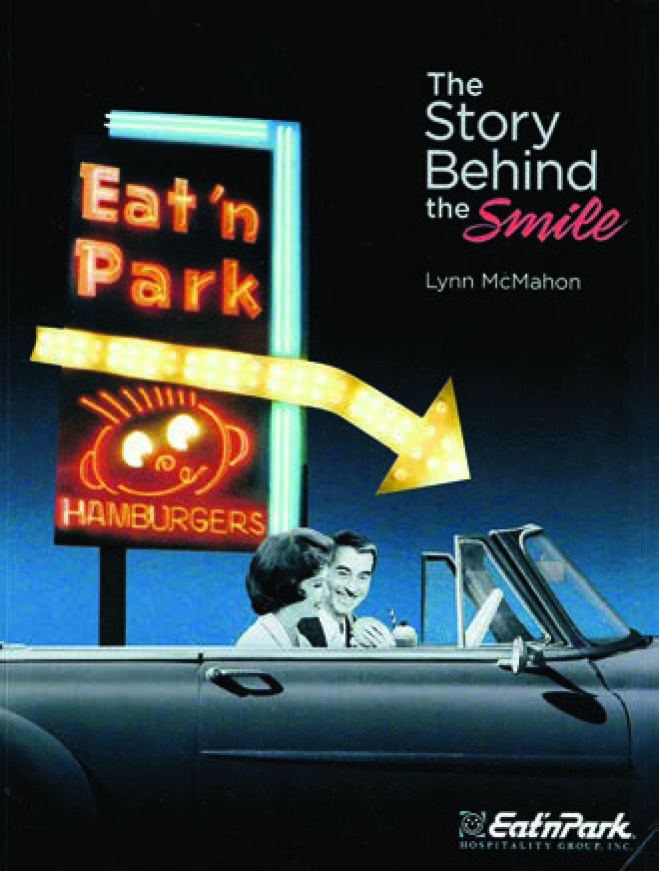
The Story Behind the Smile

The Story Behind the Smile
By Lynn McMahon
Blue Ridge Summit, PA: Globe Pequot, 2023
Softcover, 166, 27.95

Reviewed by Harold Aurand Jr.

In 1933, Bob Wian sold his DeSoto roadster to buy a 10-seat hamburger stand in Glendale, California. Soon, he created a double-decker hamburger and adopted a chubby, cartoon kid with red-and-white checked overalls as a mascot. The Big Boy chain was born.

Unlike modern franchises, which build identical stores everywhere, Wian sold regional rights to use his iconic burger and advertising imagery to different people. You could get a Big Boy at Elby’s in West Virginia, or Shoney’s in the South, or Frisch’s in Ohio.