

NOTE: Book reviews featured here are “reprints” from the SCA Journal, both recently published and from our archives. Not all titles may still be in print, or if in print, offered at the price or in the format listed.
Route 66: The First 100 Years
 Route 66: The First 100 Years
By Jim Ross and Shellee Graham
St. Louis: Reedy Press, 2025
Hardcover, 208, $42
Reviewed by Paul Sherman
Is Route 66 cool again?
The winding Chicago-to-Santa-Monica asphalt passage that brought so many Americans west and fueled so much midcentury pop culture, including a homonymous popular song and TV series, has enjoyed numerous post-heyday stages.
“America’s Main Street” has moved through replacement by wider, straighter Interstate highways in the 1960s and 1970s; decertification by state and federal highway authorities; decay and disregard; rediscovery and a push for preservation in the 1990s and 2000s; and the ho-hum quality that eventually set in, when an imitation Route 66 shield sign in a retro restaurant or other business became as clichéd as airbrushed illustrations of Elvis, Marilyn, or James Dean.
Petaluma Vintage Signs Guidebook
 Petaluma Vintage Signs Guidebook
By Katherine J. Rinehart, Al Barna, and Randall Ann Homan
San Francisco: Giant Orange Press, 2025
Softcover, 28, $10 plus shipping at https://sfneon.org/books/
Reviewed by Douglas Towne
My first encounter with Petaluma, California, the self-proclaimed “Egg Basket of the World,” was a long-ago visit to see John Burbank, a high school friend who had relocated there. He immediately took me to The Washoe House, a bar and restaurant housed in a former stagecoach stop and inn that opened in 1859. “This seems to be your type of place,” he said. And it was, with an official historical marker out front and a red porcelain enamel neon sign from the 1950s advertising the establishment.
The Story Behind the Smile
 The Story Behind the Smile
By Lynn McMahon
Blue Ridge Summit, PA: Globe Pequot, 2023
Softcover, 166, 27.95
Reviewed by Harold Aurand Jr.
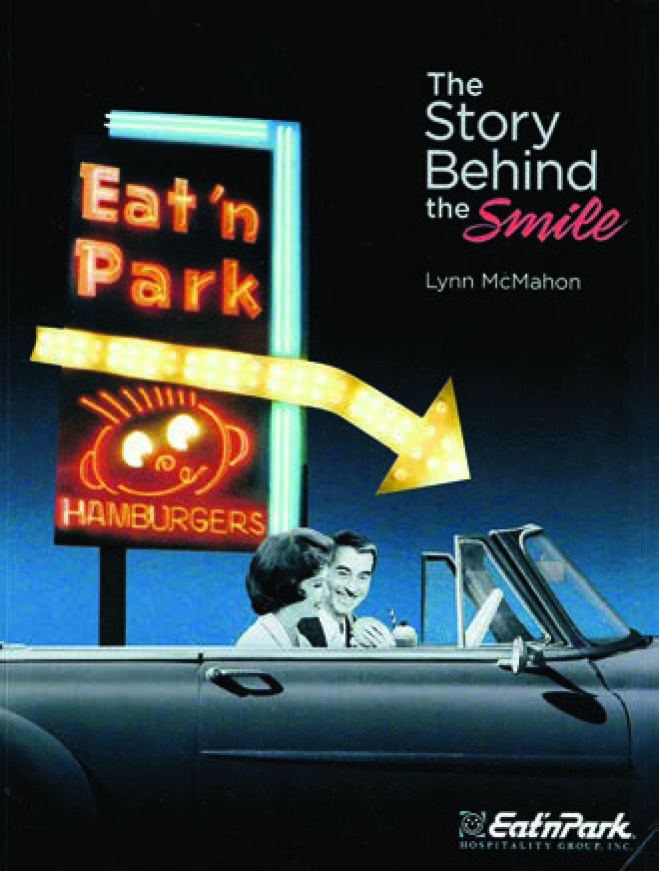
In 1933, Bob Wian sold his DeSoto roadster to buy a 10-seat hamburger stand in Glendale, California. Soon, he created a double-decker hamburger and adopted a chubby, cartoon kid with red-and-white checked overalls as a mascot. The Big Boy chain was born.
Unlike modern franchises, which build identical stores everywhere, Wian sold regional rights to use his iconic burger and advertising imagery to different people. You could get a Big Boy at Elby’s in West Virginia, or Shoney’s in the South, or Frisch’s in Ohio.
Hand Painted
 Hand Painted
By Tom Palazzolo
Self-published, 2024
Softcover, 100 pages, $25
Reviewed by William Swislow
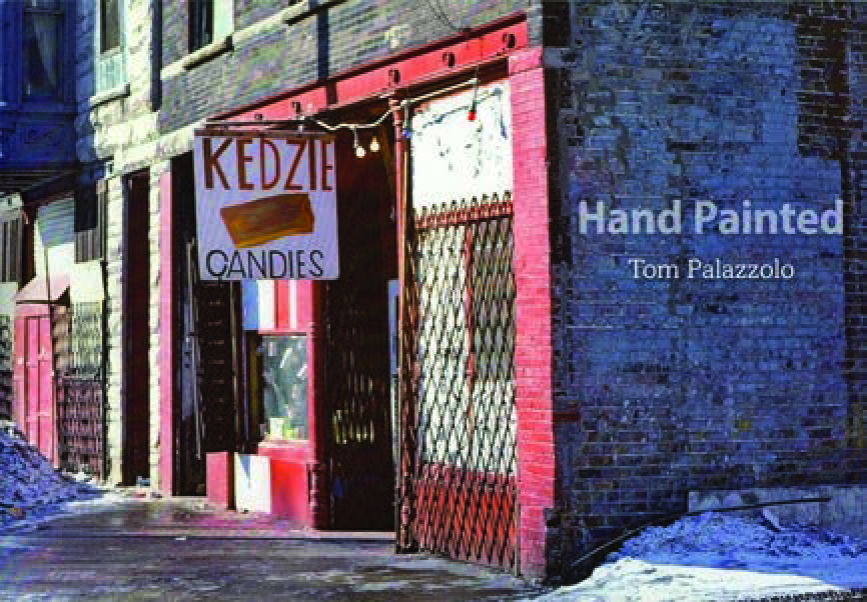
The golden age of roadside neon is, of course, long past, but at least the surviving signs are increasingly recognized as local, even national, treasures. Another once ubiquitous roadside art form, the hand-painted shop sign, has received much less recognition despite its even more precipitous decline.
The Great American RETRO Road Trip: A Celebration of Roadside Americana
 The Great American RETRO Road Trip: A Celebration of Roadside Americana
By Rolando Pujol
Artisan Publishers, 2025
Hardcover, 320, $35
Reviewed by Heather David
WANDERLUST. I have it. Chances are, you do too. Every place has a story to tell, and this narrative can be experienced through its history, cultural artifacts, and customs. Rolando Pujol’s new book, The Great American RETRO Road Trip, is a tome that is sure to help satisfy your wanderlust. In what once seemed like an impossible task to me, Pujol has produced an encyclopedia of “Roadside Americana,” one book that covers hundreds of unique attractions across the country, from coast to coast.
Screen Towers: The Drive-In Theater in America
 Screen Towers: The Drive-In Theater in America
By Steve Fitch, with an introduction by Katherine Ware (photography curator and artist)
Hardcover, 136 pages, $45
Reviewed by Steve Spiegel
I’ve been obsessed with drive-in movie theaters for as long as I can remember. The first movie I ever watched at a drive-in was Chitty Chitty Bang Bang in 1968 at a long-forgotten theater in Cincinnati, Ohio. I was five and watching that film from the comfort of our family’s Chevy station wagon, backed in with the rear door flipped open, which let me lie down with my blanket and pillow. This was the beginning of my love affair with drive-in theaters. I’ve been so obsessed that when eBay was a brand-new site, my very first purchase was a vintage drive-in movie speaker! (Yes, I still have it.)
American Sign Museum: Celebrating 25 Years
 American Sign Museum: Celebrating 25 Years
By Text: Sam Roberts, Photography: Natalie Grilli, Design)
American Sign Museum, 2025
Hardcover & Softcover, 168 pages, Hardcover $84, Softcover $42
Reviewed by Josh Silber
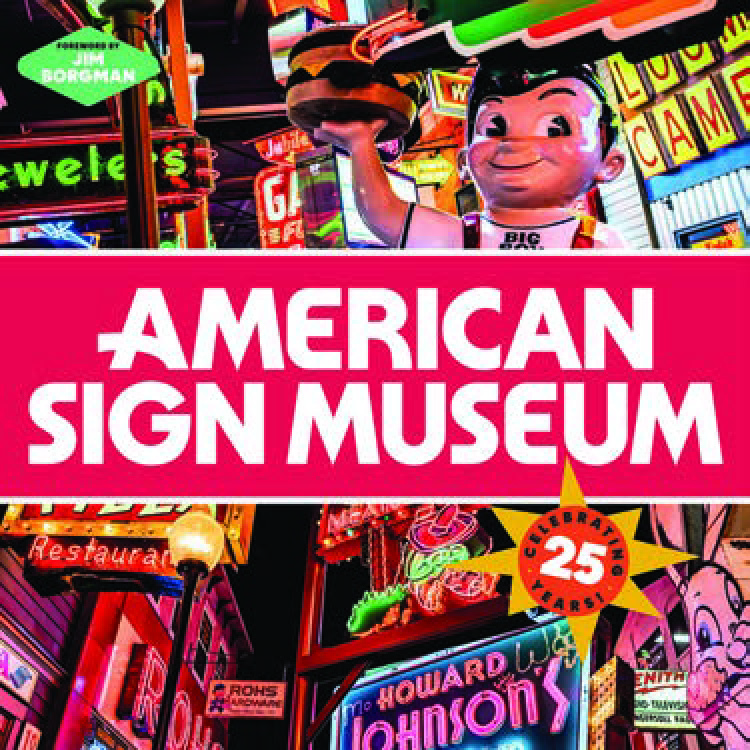
A “Great Sign” will greet you as you arrive at the American Sign Museum (ASM) in Cincinnati. Anyone of a certain age will undoubtedly recognize the iconic totem that once stood out front of so many Holiday Inn hotels in America from 1954 to 1982. And while the Holiday Inn sign remains universally recognizable even after all these years, shockingly, the one outside the ASM is believed to be the “last authentic original” in existence. The surprising history of this Great Sign is just a small bit of the overall story of signage chronicled in a new book, American Sign Museum: Celebrating 25 Years, recently published by the American Sign Museum.
The Golden Era of Sign Design: The Rediscovered Sketches of Beverly Sign Co.
 The Golden Era of Sign Design: The Rediscovered Sketches of Beverly Sign Co.
By Kelsey Dalton McClellan and Andrew McClellan
Chicago: Heart & Bone Signs and Heavy Pages Press, 2024 Hardcover, 216 pages, $85
Reviewed by William Swislow
It’s not often that you get to see technical diagrams of ghosts, but this book collects around 140 sketches that are exactly that — design drawings, complete with notes, color specs, and other instructions, from Chicago’s prolific Beverly Sign Co.
