

White Castle craves a new look for its restaurants
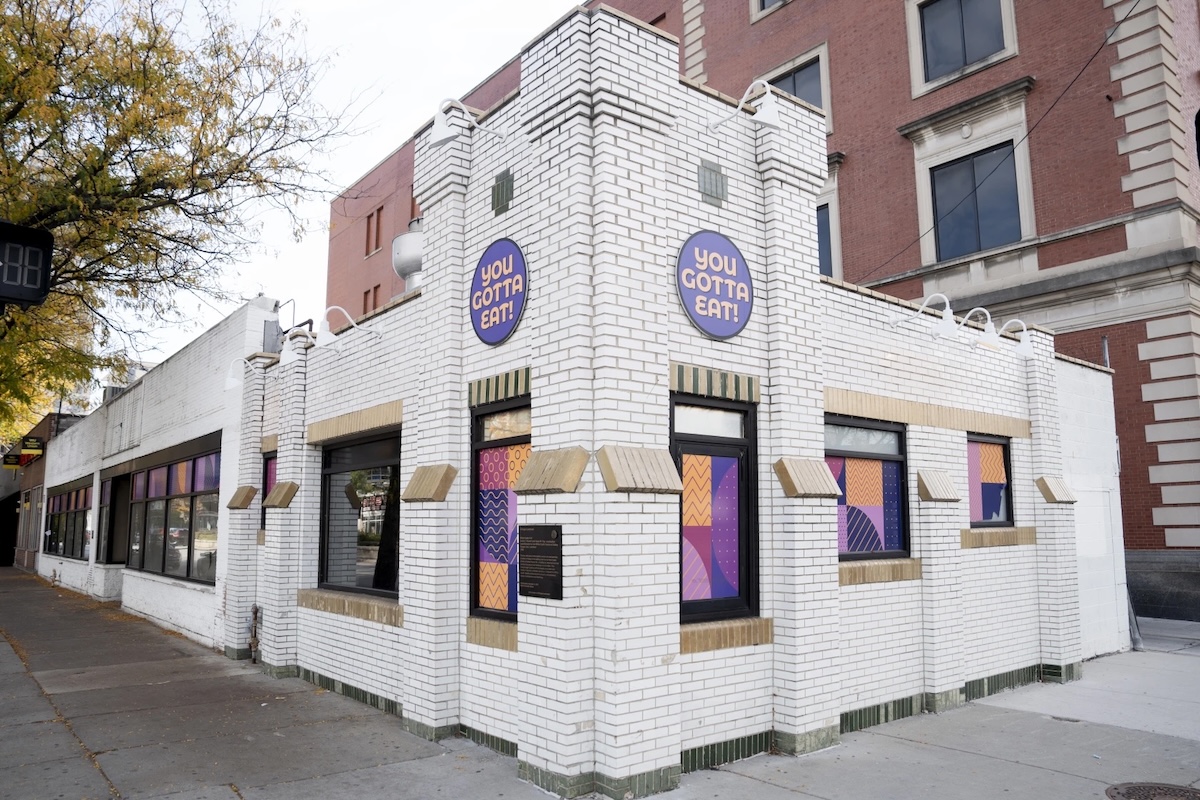
An original White Castle design from 1930 at 43 E. Cermak Road on the Near South Side. Pat Nabong/Sun-Times
From the Chicago Sun-Times: White Castle restaurants — where diners and late night revelers have satiated their hunger for a century — now has a craving of its own.
The fast food chain wants to remake its 340 restaurants, and it rolled out a new restaurant design called the Castle of Tomorrow.
The new slider joint is a functioning prototype that was unveiled in Columbus, Ohio, this month.
These Are The Oldest Roads In The U.S. Still Being Used Today

Wikimedia Commons/Dougtone
From Jalopnik: Just like you, dear reader, we at Jalopnik live for the love of cars, motorcycles, and aircraft. The racetracks, the roar of multi-cylinder machines, the speed, and the smell of burnt clutches and melting rubber are more stimulating than a double shot of espresso. Okay, maybe not espresso, we love that stuff, but you get the point, right? Heck, we’ve even got a bucket list of roads we’d love to drive. With this passion, comes the love for speed, and that speed turns the scenery into a blurry streak and bends time between corners. Some of us prefer to lift off the gas and trade the track for a quiet backroad, finding joy in the journey itself.
This one is for the love of open roads and, very specifically, some of the oldest U.S. thoroughfares that are still in use today. These are paths that once carried Native Americans, post riders, colonists, stagecoaches, and, later, cars. But America’s road system was carved, argued over, and paved 1 mile at a time until it became the sprawling network that we drive on today. Muddy wagon trails eventually became the blueprint for modern roads, and every era added its own layer of history. The U.S. road system now manages nearly 8 billion vehicle miles a day.
Some of the oldest roads have been widened, paved, rerouted, and renamed. They run through bustling towns and sleepy suburbs, quietly reminding us that the foundations of American travel were laid centuries ago. Here’s a tip of the hat to some of the oldest roads in America that are still open to everyday traffic, each one being a living time capsule for modern wheels.
Route 66 documentary to premiere in Tulsa on cross-country film tour
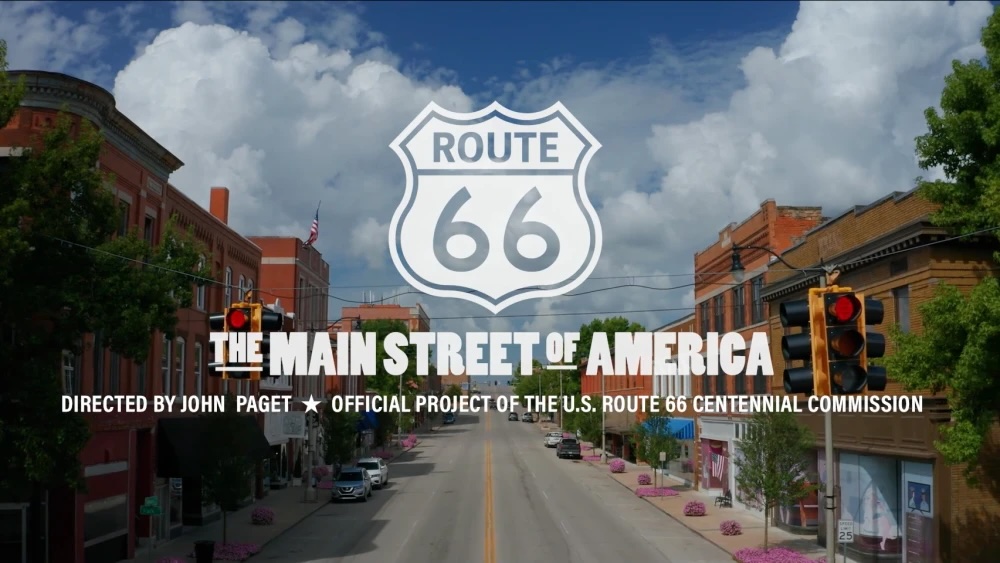
Route 66: The Main Street of America First + Main Films
From newson6.com: TULSA, Okla. – A new documentary celebrating one of America’s most iconic highways is hitting the big screen — and Oklahoma gets a front-row seat.
‘Route 66: The Main Street of America,’ directed by filmmaker John Paget, will hold its Oklahoma State Film Premiere at Circle Cinema in Tulsa on Sept. 18, 2026. The film is part of a national road show that will travel from Chicago to Los Angeles, screening at historic theaters and drive-ins along the legendary route.
Produced by First + Main Films in partnership with the National Trust for Historic Preservation, the documentary explores the revitalization of Route 66 as it nears its centennial.
After harrowing 48-year journey, an historic Wichita theater sign has a new home

Jaime Green and Travis Heying
From The Wichita Eagle: A glowing piece of Wichita theater history that’s been on quite a journey since it was displaced in the late 1970s now has a new home.
Robin Macy, who has owned Belle Plaine’s 18-acre Bartlett Arboretum since 1997, has become the latest owner of one of the twin 17-feet-long by 4-feet-tall neon signs that once marked Wichita’s Victory Theater, open at 607 E. Douglas from 1939 until it was torn down in 1977 to make way for Naftzger Park.
Macy got the sign from well-known Wichita architectural preservationist Grant Rine, who recently moved his Old Town Architectural Salvage from 134 N. St. Francis to 2020 E. Douglas. When a member of the arboretum’s regular group of volunteers, dubbed the “soil sisters,” spotted the weathered and tattered sign at Rine’s shop earlier this year, she contacted Macy — who has an affinity not only for all things vintage but also for the word “victory.”
New Exhibit Highlights Iconic Signs From Our County’s Past
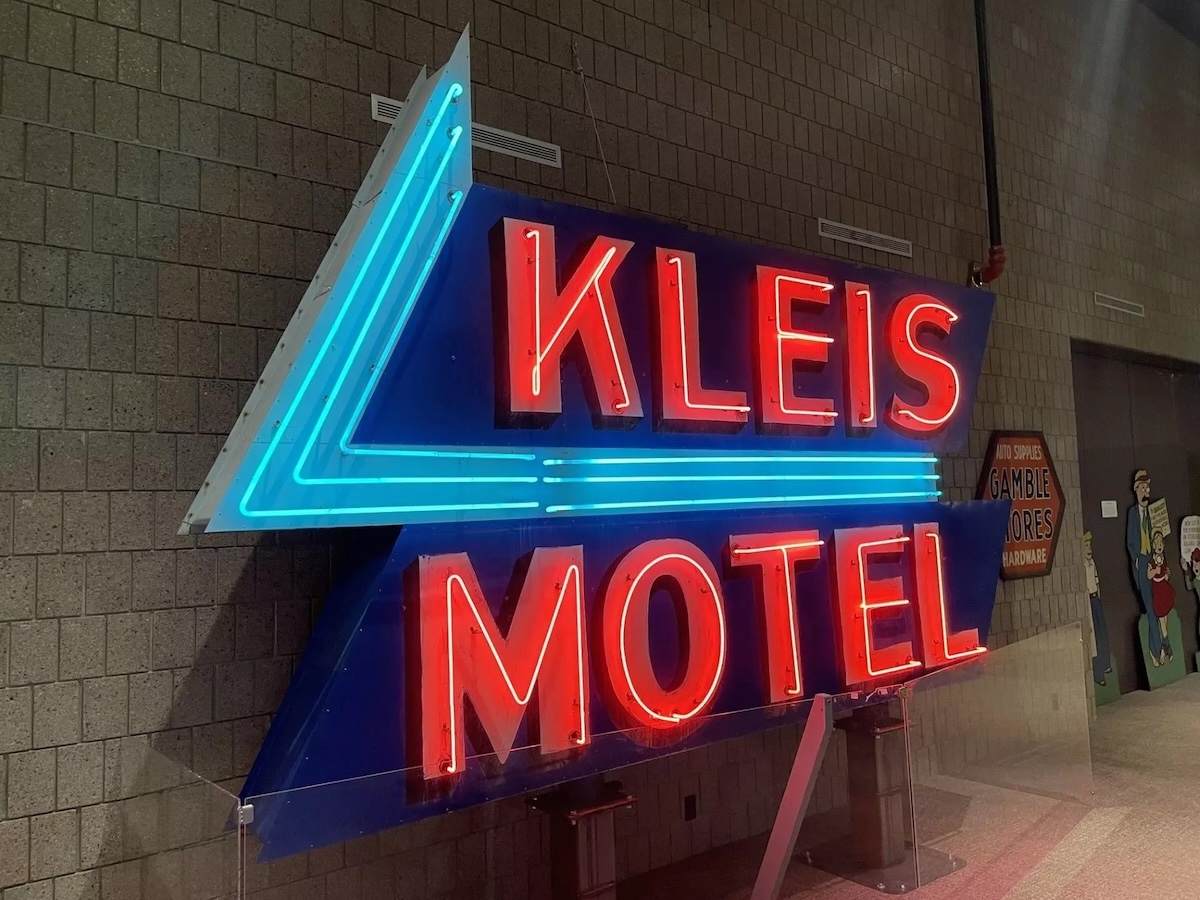
From WJON: ST. CLOUD, MN — A new exhibit will make its debut this weekend at the Stearns History Museum. “Get the Message” features advertising that has shaped the landscape of the county from the late 19th century through the mid-20th century.
The idea for the sign exhibit started when the museum acquired the Frenchy’s Dinner Club sign about a year ago. They’ve also had the Kleis Motel sign in storage for a number of years.
Dying Shopping Malls Are the Roman Ruins of Our Civilization

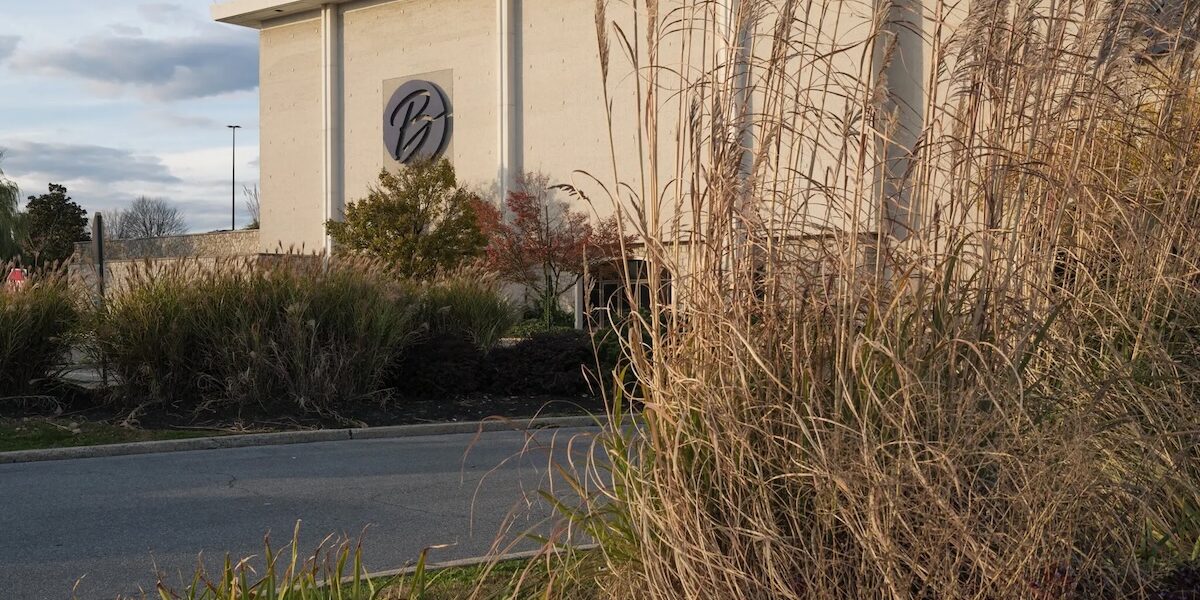
Boscovs, the last surviving department store in the Berkshire Mall, in Wyomissing, Pa. Michael Vahrenwald for The New York Times
From The New York Times: Every time I visit my local shopping mall, I risk being swallowed into the ground. The Berkshire Mall in Wyomissing, Pa., was built on a sinkhole — and building owners’ neglect over the years has led to a number of structural problems, from sewage leaks to mold to literal pits appearing spontaneously underfoot. State politicians have raised one safety concern after another, so the mall will soon be sold, then either remade or demolished.
Since the parking lot was fenced off from the public two years ago, the landscape there has been rewilding: Swamp rose mallow bushes and reeds have grown over the parking zones they used to delineate, and the weeping willow is now its own island in a sea of sun-scorched asphalt. Boscovs, the last department store in the mall still holding strong, juts up against 30-foot Magnolia trees resembling gargantuan mythical forest creatures from a Miyazaki film. These trees engulf the nearby bus stop in deep green, seeming almost to swallow a tiny old lady before she climbs aboard with her bags.