


Why the iconic Hollywood Arby’s sign from Sunset Boulevard was at Stagecoach

Crowds gather around a re-purposed Arby’s sign from the former Sunset Boulevard Arby’s location in Hollywood at the Stagecoach Music Festival in Indio. Arby’s had a pop-up at the event and the sign became a popular photo spot. (Allen J. Schaben / Los Angeles Times)
From the Los Angeles Times: A weekend in the desert is a go-to getaway for Southern Californians — even if you’re a beloved neon sign.
Nearly two years after the Hollywood Arby’s closed, its cowboy hat shone again this weekend at the Stagecoach Music Festival in Indio.
The restored sign showed up more than 130 miles away from its original home as part of the roast beef chain’s pop-up at the festival at the Empire Polo Club, where it became one of the event’s go-to photo spots.
Too Delicious to Die: The Push to Save Old-School Diners

Visual by Emma Rose Milligan
From The New York Times: Mary DeLetto, 58, and Lauri Steinberg, 53, are best friends who meet at Summit Diner in North Jersey once a week to catch up. “We walk in and they know — they’re like, ‘Here come the girls,’” Ms. Steinberg said.
“Lauri doesn’t even have to order her order anymore,” Ms. DeLetto said.
Ms. Steinberg confirmed. “I haven’t actually given them my actual order verbally in two years,” she said.
Lindy’s Diner wall collapses days after the city shut the business down due to safety concerns

Firefighters talk in front of Lindy’s Diner on Monday after the exterior wall of the Bliss Building collapsed. Baca/Journal
From the Albuquerque Journal: A wall that city officials warned was in danger of collapsing fell Monday at Lindy’s Diner, sending part of the building onto a Downtown Albuquerque sidewalk and narrowly missing a passing vehicle.
The incident happened days after the restaurant was ordered closed.
The wall of the Bliss Building, at 500 Central SW, collapsed around noon, Albuquerque Fire Rescue Lt. Jason Fejer said, forcing occupants in connected buildings to evacuate.
No injuries were reported.
Crossing the Lines: Highland Park Resident wants to save the Highland Appliance sign

Highland Appliance off Woodward. Photo credit: Isaiah Lopez, WDET
From Detroit Public Radio: Drivers traveling along Woodward Avenue in Highland Park may be familiar with the abandoned Highland Appliance store just north of the Davison Freeway.
It was the first in a chain of consumer electronics and home appliance stores, founded in 1933 in Highland Park. By 1985 the chain had more than 80 stores in the Midwest. But in the early-90s, the company filed for bankruptcy and closed all of its locations. The historic building on Woodward is now on the city’s demolition list after sitting vacant for decades.
But one Highland Park resident, Kira Thomas, is trying to save the signage on the building. She spoke with WDET’s Bre’Anna Tinsley.
Historic Old Brick Road Now a Battleground Between Flagler County Preservation and Palm Coast Expansion

Old Brick Road at the Flagler-St. Johns County line. Flagler County has been coating the 111-year-old brick road with sand to reduce damage from logging trucks, the principal users of the public road. (© FlaglerLive)
From Flagler Live: The Flagler County Commission is ready to play hardball to protect a treasure older than the county: no at-grade crossovers on historic Old Brick Road unless Palm Coast and the developer of thousands of acres of the future “western expansion” of Palm Coast ensure wide buffers along the road.
In the meantime, the county is pulling back from a proposed joint agreement with Palm Coast and the developer until those conditions are met. (See the proposal here.)
It was a stunning, unexpected development for a commission generally friendlier to developers, if with conditions. This was more like a decree as the commission took an unequivocal stand for preservation and the county’s future vision of the red-brick road as a linear park free of motorized vehicles and a centerpiece of the county’s nature-tourism destinations.
Built during World War I, Old Brick Road is the historic remnant of what used to be the Dixie Highway that went from Detroit to Miami. It is now barely a two-lane road whose 8-mile portions in Flagler County are paved with vintage bricks. According to Flagler County Historical Society President Ed Siarkowicz, Flagler County has the road’s longest uninterrupted surviving section. It’s on the National Register of Historic Places and it’s part of the Heritage Crossroads.
The Remarkable, Amazing Stories of Route 66 Reflect the Twists and Turns of 100 Years of Americana

Clip from Disney/Pixar’s Cars
From Smithsonian magazine: The famed Route 66 has had many lives. It emerged in an era when cars were new but roads were dangerous and intended for horses. But there were those who imagined a highway that would connect the cities of the Midwest to the West Coast — and Route 66 was born.
During the Great Depression, the roadway helped migrants find their way to new jobs in the West. During World War II, it facilitated the transportation of munitions and armaments en route to the Pacific theater. Later, it became a busy thoroughfare for Americans wanting to explore their country. Storefronts, towns, gas stations, cafes and much more grew up along its edges. Then, as major interstates became the main byways for traveling Americans, Route 66 fell into obsolescence, becoming more a time capsule than roadway. Today, some of those roadside stops still exist, catering to tourists seeking a dose of unvarnished Americana.
This episode chronicles the origin of the federal interstate system and how Route 66 fits into that history — before the massive tangle of highways and roads we know today were paved and packed with traffic.
Route 66 at 100: The Native American story behind the US’s most famous highway
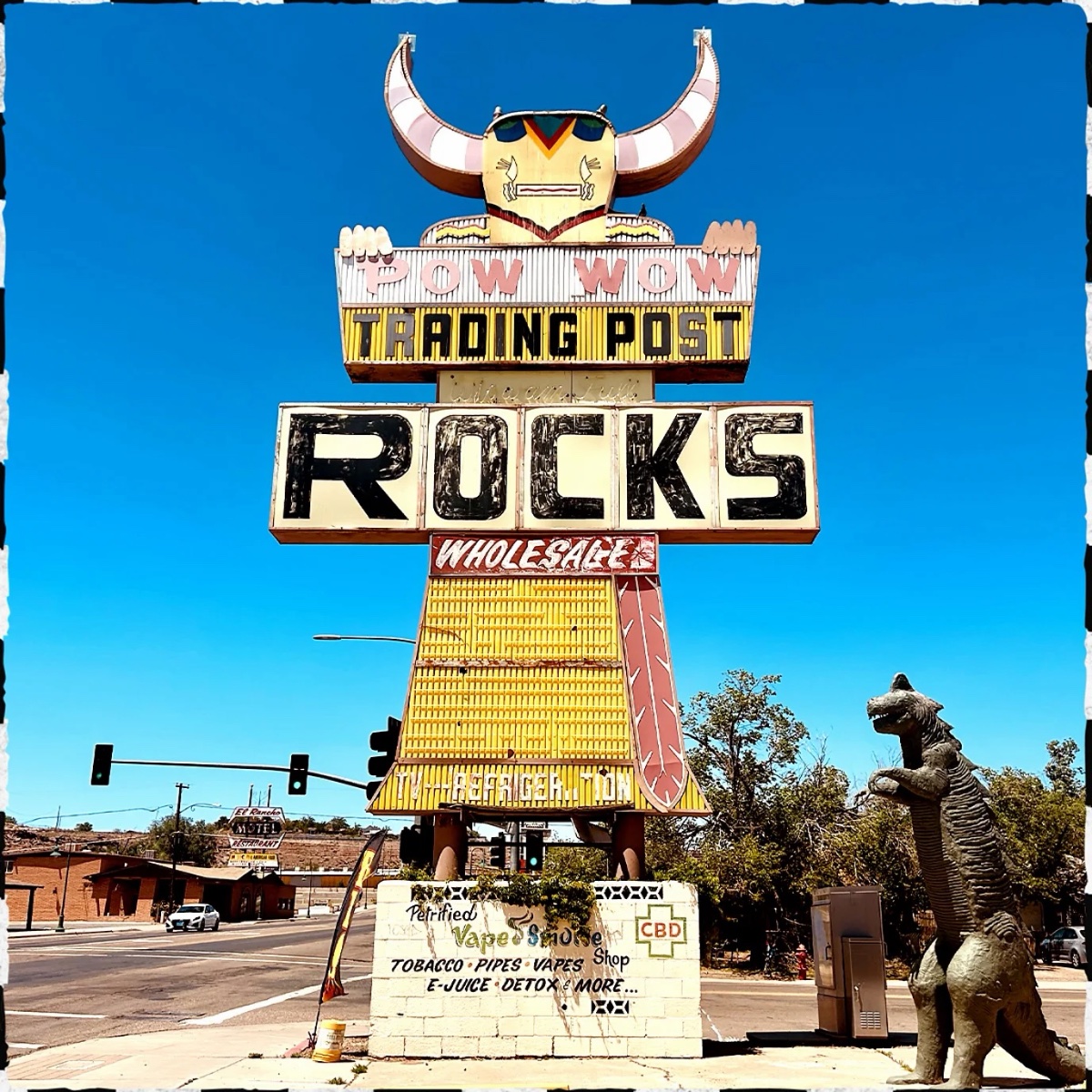
More than half of Route 66 passes through or alongside Native land. (Credit: Zoey Goto)
From the BBC: Stretching from Chicago to Santa Monica, the road passes through Native lands for much of its length – yet Indigenous voices have long been overlooked. Now, First Nation communities are reclaiming their place along the Mother Road, reshaping how travellers understand and experience the legendary highway.
In a low-rise strip mall in suburban Tulsa, the scent of sizzling bison drifts from the kitchen each time the door swings open. Inside Nātv – a quietly radical restaurant that opened in 2022 – sprigs of native grass from the Great Plains, juniper berries and sunchokes line the slate-grey walls. Across the table from me, chef Jacque Siegfried, who is of Shawnee descent, reflects on the culinary gap she’s trying to bridge. “It’s still really hard to find Native American restaurants around here,” she says, her navy-and-purple hair swept into a high topknot.