


Restaurant’s historic neon sign renovated and relit in SLO’s Chinatown

Mee Heng Low’s neon sign, seen here on Jan. 23, 2026, was renovated and relit after the San Luis Obispo noodle house won a $50,000 grant for exterior renovations. (Joe Tarica/jtarica@thetribunenews.com)
From the San Luis Obispo Tribune: Downtown San Luis Obispo’s Chinatown district got a colorful upgrade on Wednesday night when a historic noodle shop unveiled its newly renovated neon sign.
When Mee Heng Low at 815 Palm St. won a $50,000 grant from the Backing Historic Small Restaurants grant program, owner and chef Russell Kwong knew exactly what he wanted to do with the money.
The restaurant’s broken neon lights required some much-needed TLC, and 10 months after Kwong first applied for the grant, the neon is glowing bright again.
The return of the roadside motel

Dr. Wilkinson’s
From The Manual: Some things don’t need to come back. You know, like giant belt buckles or COVID. Other things are welcome back anytime (looking at you Brut IPA beer and sherry wine).
One thing on the verge of roaring back is the roadside motel. These lower-profile lodging destinations used to be major attractions along major thoroughfares like Route 66. These days, they’re much less common but thanks to a love of both road trips and all things retro, they’re poised for a colossal return.
Roadside Attractions in Canada

Mr. PG, pictured here in 2007, is a log-man statue honouring the forestry industry in Prince George, British Columbia. (“Mr PG” by Brenden Van Stolk at English Wikipedia is licensed under CC BY-SA 3.0.)
From The Canadian Encyclopedia: The “Great Canadian Road Trip” is a rite of passage for many Canadians, and roadside attractions offer fun stopping points and detours on long journeys, providing learning opportunities, laughter and a sense of welcome to visitors. Here are some of Canada’s iconic roadside attractions.
‘People love Betty’: Quirky Boise Bench icon wins ‘landmark’ decision
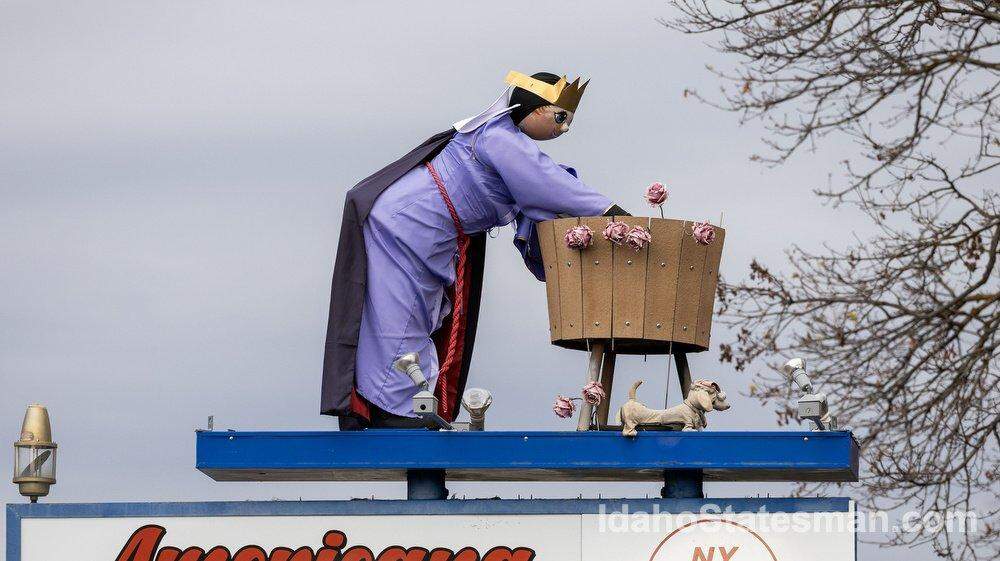
Boise’s iconic moving washing woman sign on Vista Avenue in December 2025. Now, the famous laundress is a historic landmark. DARIN OSWALD doswald@idahostatesman.com
From the Idaho Statesman: The Boise City Council ironed out any question of Betty the Washerwoman’s historical significance on Tuesday: She’s a landmark.
After 70 years on Vista Avenue, council members unanimously agreed to grant the animatronic sign protection for posterity at its post between Overland Road and Kootenai Street on the Boise Bench.
The sign, which depicts laundress hard at work over a washtub, was built for the Econo-Wash/Maytag Laundry circa 1959, according to Richard Jarvis, senior historic preservation planner. It’s hallmark style — metal and moving — was common in the middle of the century, Jarvis said. And, he added, its enduring presence come to symbolize the post-World War II boom of the Boise Bench.
The history of Pickin’ Chicken restaurants and their fleet of delivery Beetles in Toronto

Photo: Facebook
From blogTO: Long before the Mimico waterfront was lined with residential towers, one of Toronto’s earliest takeout and delivery-focused restaurants operated there under the catchy name Pickin’ Chicken Bar-B-Q.
The business came about in 1953, decades before food-delivery apps became the norm, and operated at 319 Lake Shore Blvd. W., an address later renumbered to 2261 Lake Shore Blvd. W.
Owned by Saul and Jerry Goldberg, Pickin’ Chicken served fried and roasted chicken, ribs, and sauces, and offered dine-in, takeout, and home delivery at a time when very few restaurants in the city did.
Man v food: my quest to find the ultimate diner in the US

Olneyville New York System restaurant serves hot dog-like delicacies. ALAMY
From The Times: New York City, 2001. My dad and I are at Carnegie Deli, each waiting ona corned beef Reuben sandwich and potato pancake. It’s loud and it’s busy. Finally the sandwiches arrive. They’re bigger than my 14-year-old head.
“Hope you’re hungry,” says the grey-haired waitress, who’s probably been teasing tourists with that line since the deli opened in 1937. One bite into the tender corned beef — piles of thin-cut brisket, not the tinned pink stuff back home in Britain — topped with Swiss cheese and tangy sauerkraut, and I’m in. “This is incredible,” I say to my dad, who, wary of us both returning home one size up, insists that we save half for the next day.
The big portions. The big service. The big jug of tap water. The big, well, everything. So began my love of America — and the American diner.
As I travelled to all 50 states over the years, I realised that the diner binds the country together almost as much as the constitution. Every state has them and every American eats at them. At Snow City Cafe in Anchorage, Alaska — about 3,300 miles from New York — I was sitting at the counter between a guy in a Maga hat and a lady who apologised to me for the mess of US politics. It was awkward but somehow beautiful.
Behind Americans’ love for diners

From CBS Mornings: As the U.S. prepares to celebrate 250 years, the “CBS Mornings” series “USA to Z” explores Americans’ love for diners. The casual restaurant was invented back in the 1800s. Kelly O’Grady reports.