


Toronto is experiencing a great die-off of its most iconic neon signs

Jack Landau
From blogTO: Neon signs were once a ubiquitous feature of downtown Toronto: there was once an era when a vast stretch of Yonge Street was bathed in the buzzing glow of neon across a near-continuous strip of record shops, strip clubs and arcades.
The Zanzibar Tavern, the last true neon landmark of what was once the epicentre of neon signage along Yonge Street, recently met a sad fate when a three-alarm fire tore through the building on Aug. 16, compromising the structure’s roof and resulting in damage to the strip club’s iconic neon sign caused by the boot of a climbing firefighter.
Broken but apparently not destroyed, the sign is now in serious jeopardy as owners assess the damage.
One of Midtown Sacramento’s Oldest Neon Signs Is Leaving the Grid
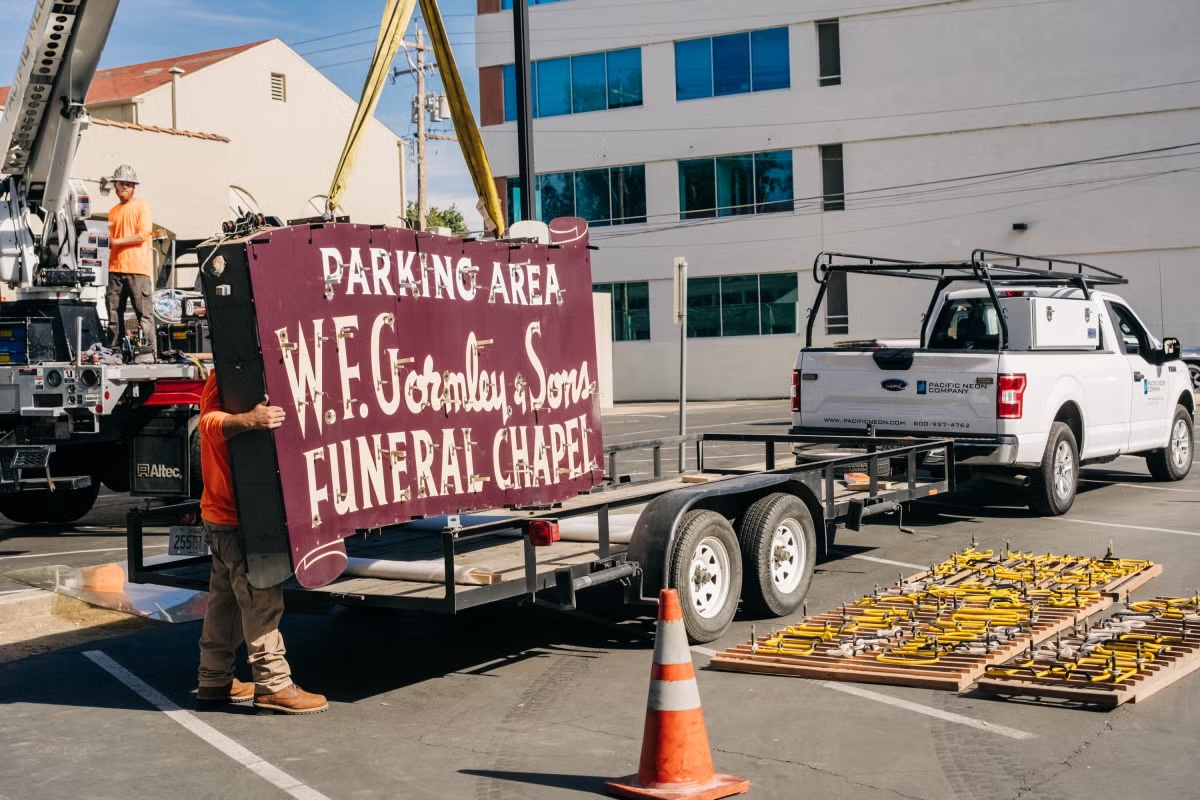
The sign is lowered to the ground. (Photo by Francisco Chavira)
From Comstock’s Magazine: Midtown lost a landmark last week. The 129-year-old funeral home W.F. Gormley & Sons took down its iconic neon sign — one of the oldest remaining on the grid — Aug. 18 in preparation for its move to Land Park. The sign, a stylized maroon scroll emblazoned with the name of the business and the all-important words “Parking Area,” had been in place for nearly a century.
Family behind Las Vegas’s iconic neon signs keeps century-old tradition glowing

From Fox5 Las Vegas: YESCO, a family-run company founded in Utah, helped shape Las Vegas neon.
The great American road trip is in peril

Our driving breaks in Iowa were marked by signs of climate action, from a wind energy-themed rest area to electric vehicle charging at the “world’s largest truck stop.” Katherine Bagley
From Grist: My husband, friends, and I sat huddled at a faux-marble-topped table in the lobby of our Utah hotel, looking down at a Google Maps route pulled up on my iPhone. We pinched and scrolled the screen as the breakfast buffet crowd hummed around us.
We were less than a week into a Great American Road trip — one that would take us 9,000 miles from coast to coast and border to border. Today’s agenda was to relocate from Moab, the gateway city for Arches and Canyonlands national parks, to our hotel near Bryce Canyon. But there was a problem:
Utah was on fire.
Deserted Diners and Muted Pastel Scenes Captured on the Roadsides of the American West

Helene Havard
From My Modern Met: For photographer Helene Havard, travel is a way of exploring how places shape us. Through her signature pastel color palette, she has turned very real and active locations into dreamy, Wes Anderson-like sites where time doesn’t seem to pass. Having captured the cheerful Santa Cruz Boardwalk and Santa Monica Pier, Havard has set her sights on a diametrically opposite subject. In her latest series, titled End of the Road, the photographer captures the businesses that dot the highways of the American West.
“End of the Road belongs to an ongoing exploration of places that already live within our collective imagination,” Havard says. Born in France and based in French Polynesia, the photographer’s earliest knowledge of these roadside sites came from art, film, and photography rather than a firsthand experience. “The series considers how these iconic landscapes shape perception long before we ever encounter them,” she explains, “treating the American desert as an idea as much as a place.”
Summit Diner Shines Again
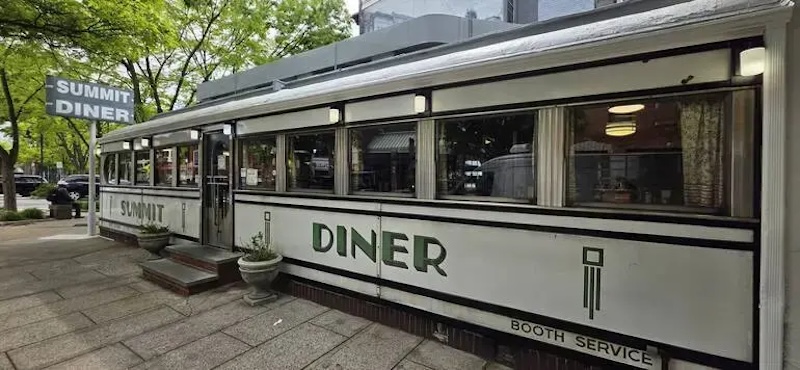
The Summit Diner has completed a grant‑funded restoration that returns its 1939 stainless‑steel façade to its original look while business, community partnerships, and its long family ownership remain strong. Photo Credit: Jim Greberis
From TAPinto Summit: SUMMIT, NJ – A fresh shine on a 97‑year icon.
The Summit Diner has completed a full exterior restoration, returning the 1939 O’Mahony structure to its original appearance after months of work funded through a national historic‑preservation grant.
Michele Greberis, who owns the iconic diner with her husband Jim, said seeing the stainless‑steel façade restored to its historic condition marks a major milestone for the family‑run business.
How New Jersey Became the Diner Capital of the World

Trent Diner on US 1 in Trenton, circa 1940s. From Wes Ponder’s postcard collection
From New Jersey Digest: New Jersey has well over 400 diners. At its peak, the Garden State was home to almost 600. For a state of this size, that’s no small number. There’s about one diner per every 16 square miles—or, if you want to put it into human terms, one diner per every 22,000 residents.
If you’re reading this, then it’s probably not news to you that New Jersey is considered the diner capital of the world. But how did a small Northeastern state take that crown? New Jersey certainly didn’t invent the diner. Instead, it perfected, manufactured, and mythologized them more than any other state.
Diners are an intrinsic part of the Garden State’s fabric. Through plates of disco fries and club sandwiches—gyro platters and French toast—New Jersey remains the diner Mecca today. It’s worth taking a deeper look at how this came to be, and how we’ve maintained the status throughout the decades.