


Ghost signs: Fading reminders of the past
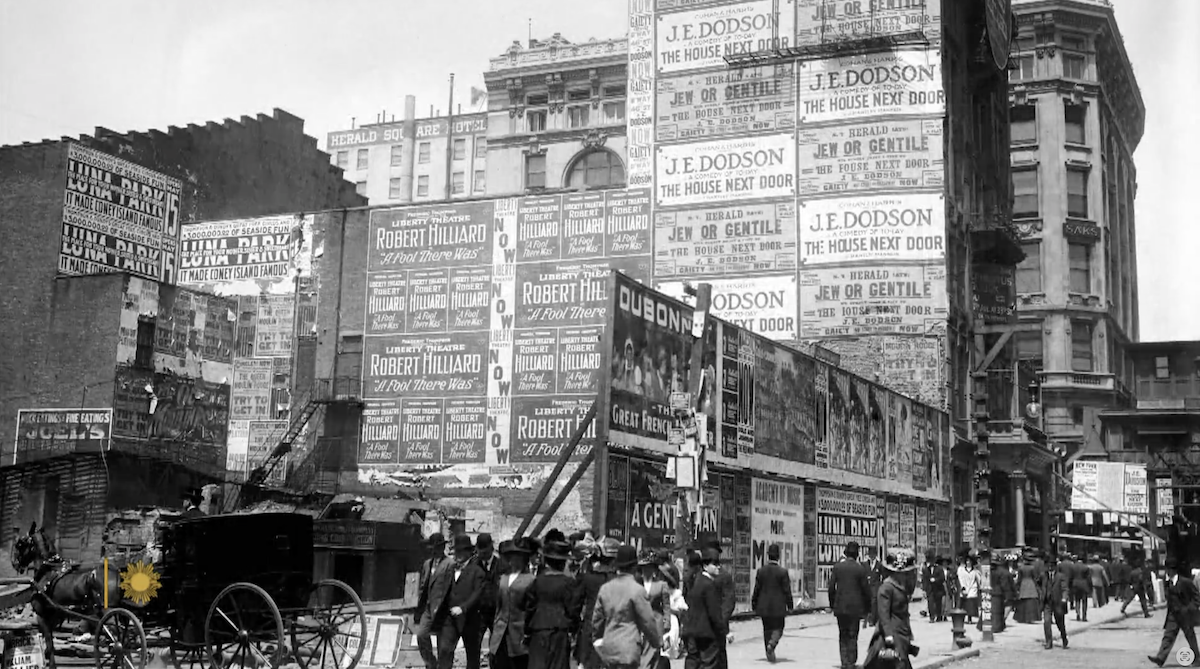
From CBS News: They’re painted advertisements from long ago, for businesses that may have since died. But remnants of these “ghost signs” still remain, haunting our urban spaces. Correspondent Conor Knighton talks with marketing expert Ronald Ladouceur about the origins of these outdoor ads; and with artist Craig Winslow, who is bringing ghost signs back to life.
The Artist Behind New York City’s Most Iconic Restaurant Signs
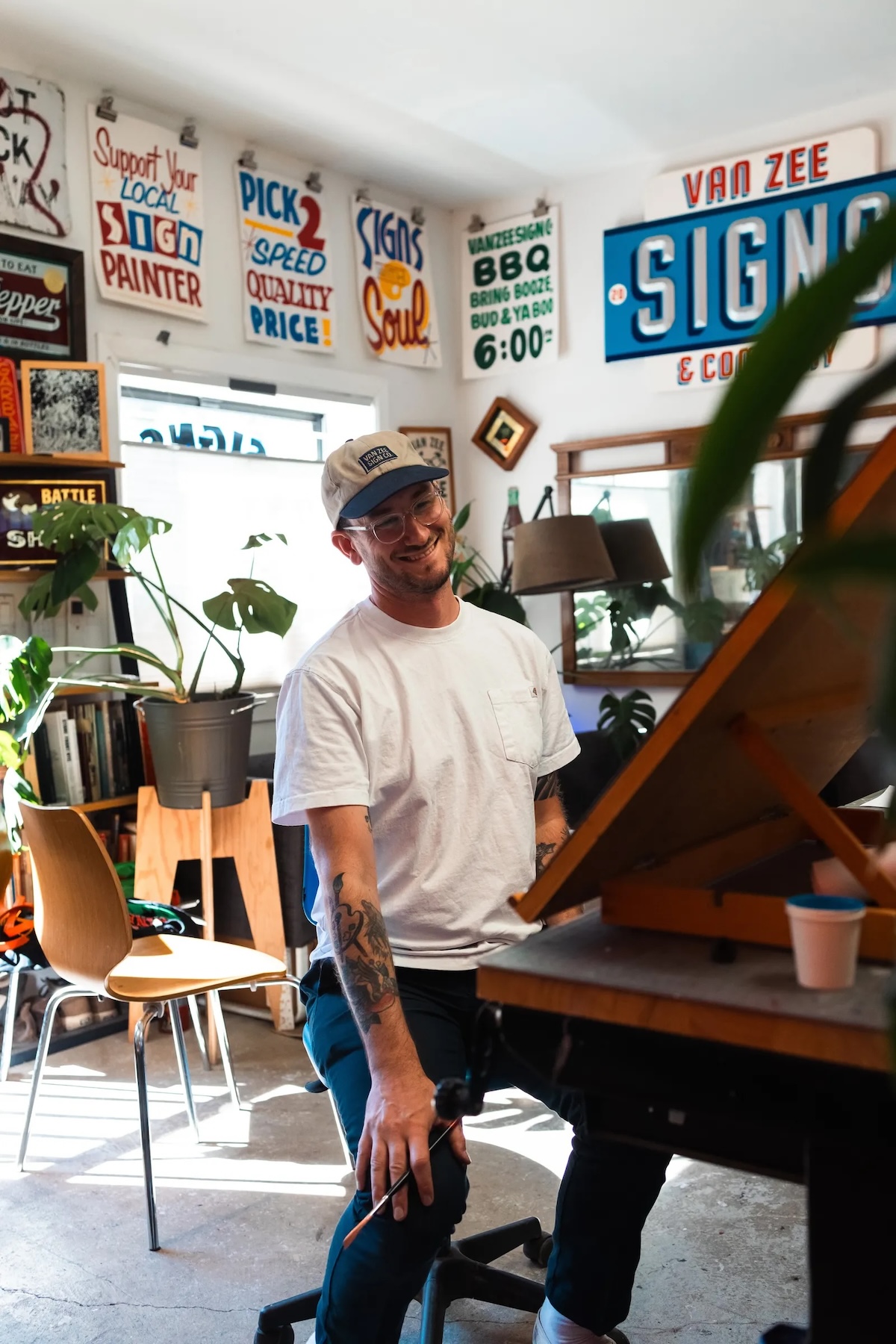
Photograph by Nash Studio
From Bon Appétit: In Person of Interest we talk to the people catching our eye right now about their projects past and present. Next up, we chat with Brooklyn-based sign painter Will Van Zee about the art of hand-painted restaurant signs, how Instagram has helped revive interest in the craft, and why handmade design still matters in the age of AI.
If you’ve walked past Elbow Bread, S&P Lunch, Levain Bakery, or dozens of other New York restaurants, you’ve probably seen Will Van Zee’s work. Through his Brooklyn-based studio, Van Zee Sign Co., the artist creates hand-painted and gilded signs that have become a fixture of the city’s restaurant landscape. While the online discourse around AI-generated food imagery heats up, Van Zee’s most effective tools remain decidedly old-fashioned.
Neon Nights on Route 66—The Story of The Motor Lodge
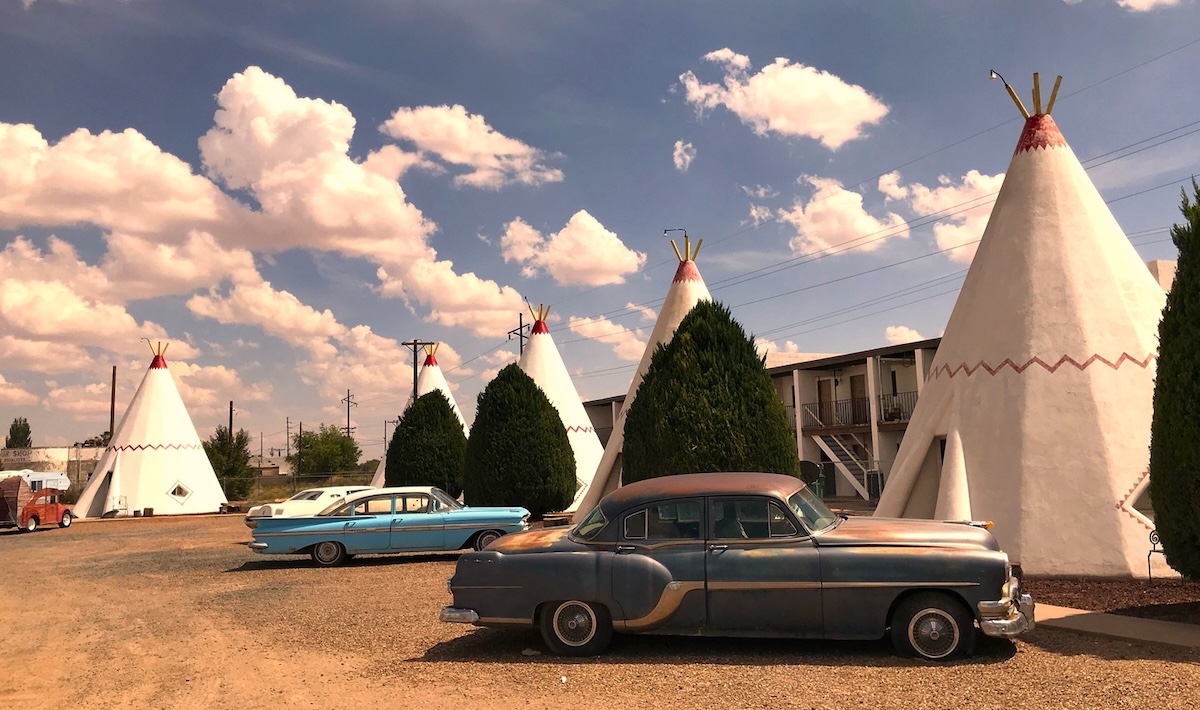
Photo by: Tim Kessel
From Rider Magazine: The story of Route 66 is inseparable from the rise of the American motor lodge. As automobile travel and road trip culture exploded in the mid-1900s, the United States needed a new kind of lodging, one designed not for rail passengers or urban hotel guests but for families on the move. Along Route 66, this demand gave birth to the motor lodge and motor court: simple, car-friendly accommodations where travelers could park right outside their rooms, rest for the night, and get back on the road by morning.
Help is on the way to relight Roanoke’s H&C Coffee sign. Over $100,000 is raised toward $430,000 goal.

The Historical Society of Western Virginia announced a $430,000 campaign to relight and restore the H&C sign, an iconic symbol in downtown Roanoke. Photo by Samantha Verrelli.
From Cardinal News: Nelson Harris, former mayor of Roanoke and board member of the Historical Society of Western Virginia, said he remembers thinking the H&C Coffee sign was “amazing” as a child.
“Just because it was so multicolored and had that motion to it, that movement to it,” Harris said in an interview Thursday. He said the sign, when lit, appears to move, pouring coffee from the pot into the teacup.
The sign, which is about 80 years old, went dark about four years ago, due to age, weather and time.
1964-65 World’s Fair Remnants Outside NYC

Photo by Kathy Black, All Rights Reserved
From Untapped Cities: While on a walking tour of downtown Saint Louis, Missouri, I was surprised to stop at a building that originally stood in New York City. Now an IMO’s Pizza restaurant, the concrete structure was first the Spanish Pavilion at the 1964-65 World’s Fair. I soon discovered that this anomaly was not as rare as I thought.
The world came to Flushing Meadows Corona Park in 1939-40 and 1964-65 for the World’s Fair. Most of the fair structures were meant to be temporary and torn down at the close of each event, but many (thankfully) found new use. While the former fairgrounds in Queens still retain many remnants—which you can see on our expert-led walking tour—here we take a look at a few remnants that made it outside of New York to other parts of the nation!
20th century Americana radiantly on display at the National Neon Sign Museum in The Dalles
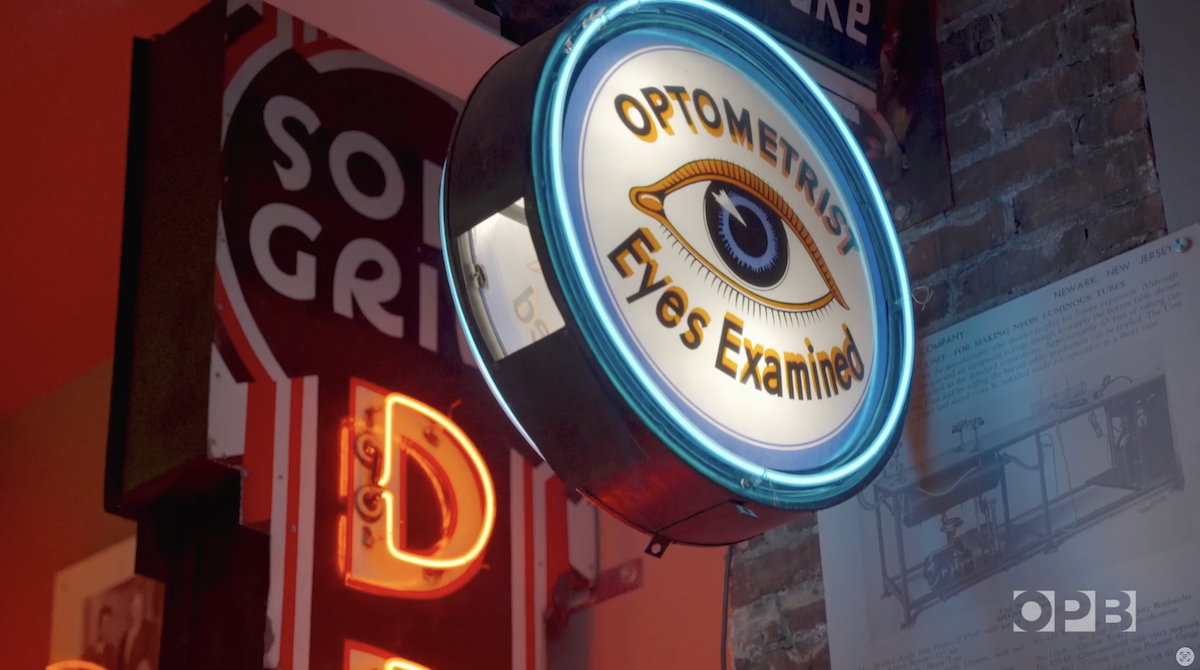
From OPB: Driving along the scenic Columbia River Gorge on I-84, you might not expect to find many of the bright, candy-colored vintage neon signs that once illuminated America’s main boulevards. But a time capsule of this craft can be found in The Dalles, Oregon, home to the National Neon Sign Museum.
Inside the museum, you’re greeted by an array of stunning classic signs from many eras, from the earliest illuminated signs following the invention of the light bulb to the first patented neon tube in 1910, and eventually to neon’s dominance as an advertising art form, attracting eyes and customers with its inviting glow, from rural diners to big-city businesses.
In 2014, retired neon sign maker Steven Benko, creator of many signs for McMenamins, had a dream of creating a museum dedicated to neon. Around that time, he learned that the historic 1910 Elks Building in The Dalles was up for sale.
here Neon’s Warm Glow Can Be Found and Celebrated
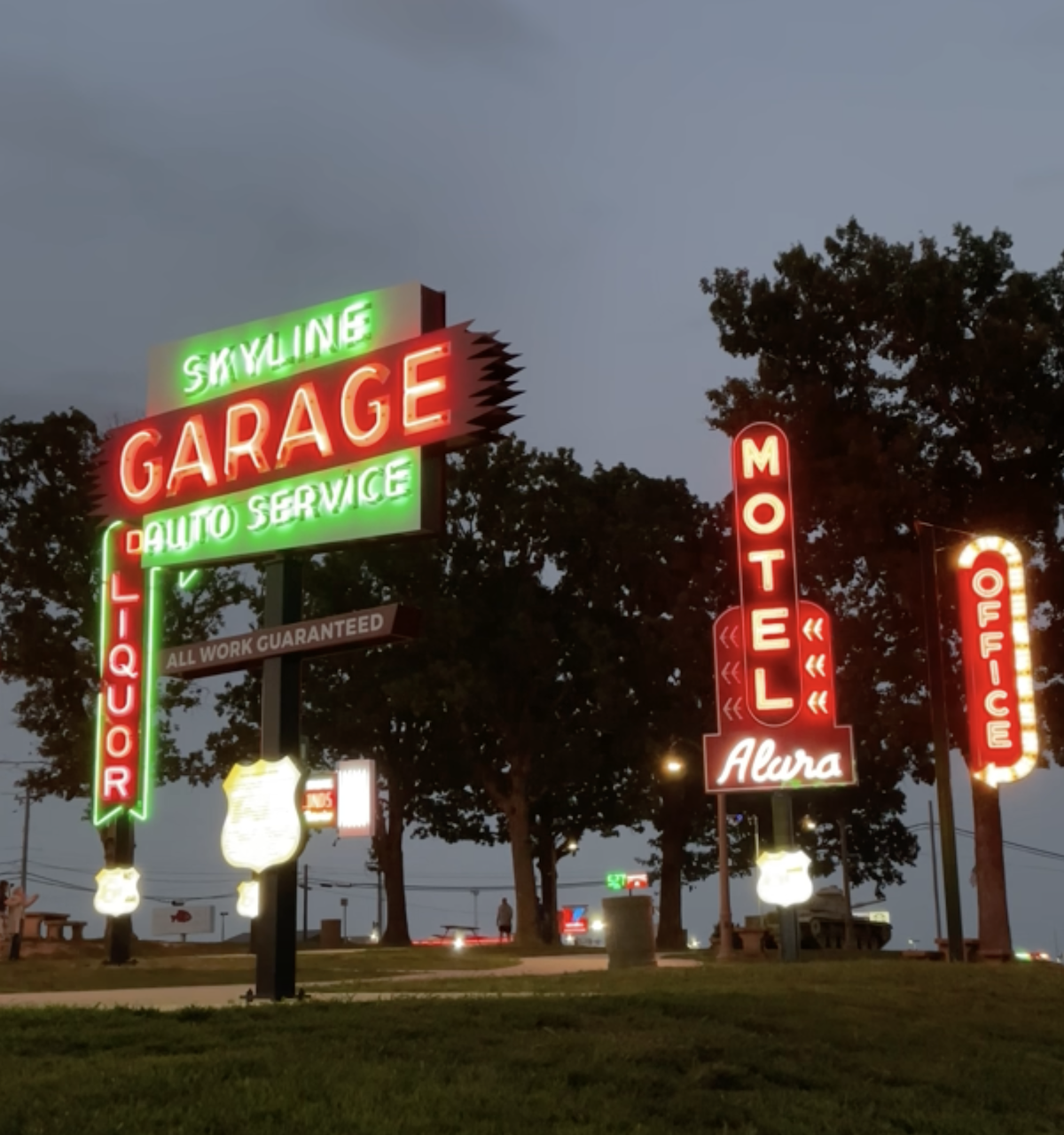
The Route 66 Neon Park has joined other institutions across the country, from California to New York, that honor neon signs. By Neeta Satam For The New York Times
From The New York Times: In 2013, Beth Wiles attended a conference in California for tourism specialists focused on Route 66. At a talk on neon signs — one of the signatures of the 2,448-mile historic highway — the speaker mentioned the need for a place to display the dazzling relics.
Wiles, then the executive director of the Pulaski County Tourism Bureau, knew the perfect spot — a roadside park in her home of St. Robert, Mo., that sat in the median of the old Route 66. What better way to showcase the city’s link to the so-called Main Street of America, which turned 100 this year.
“Knowing the route and the romance of the road, it slows you down to a better time,” she said of the highway’s attraction in the George M. Reed Roadside Park, about 200 miles southeast of Kansas City, Mo.