


A Milestone for the American Motel
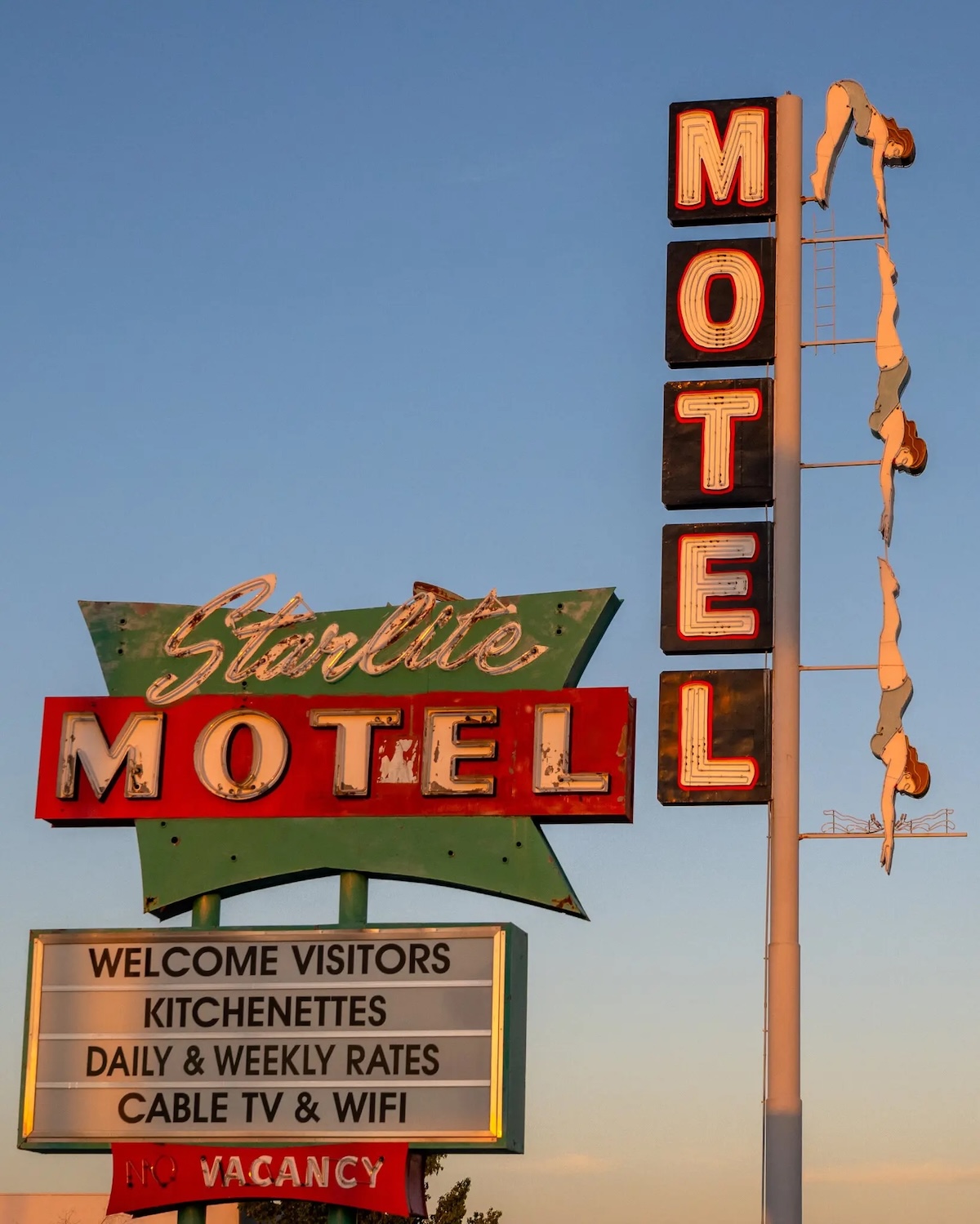
The Starlite Motel in Mesa, Ariz. Ash Ponders for The New York Times
From The New York Times: When I was growing up in the suburbs of Denver, my family and I took a lot of road trips: quick weekenders into the Rocky Mountains; longer jaunts to Durango, Colo., or the Great Sand Dunes; multiday journeys to southern Oregon and back.
Those drives allowed lots of time to observe the wide-open scenery and roadside attractions — and, punctuating those long stretches of freeway, the motels.
Late last year, on the hunt for a story, I was surprised to find a widely agreed upon date when the first motel opened in the United States: Dec. 12, 1925. That was when the Milestone Mo-Tel in San Luis Obispo, Calif., turned its lights on, beckoning drivers traveling from San Francisco to Los Angeles and in between to stop and stay the night.
TONIGHT! “FREE CABLE,” AN IMMERSIVE EXHIBITION REIMAGINING AMERICAN MOTEL SIGNAGE
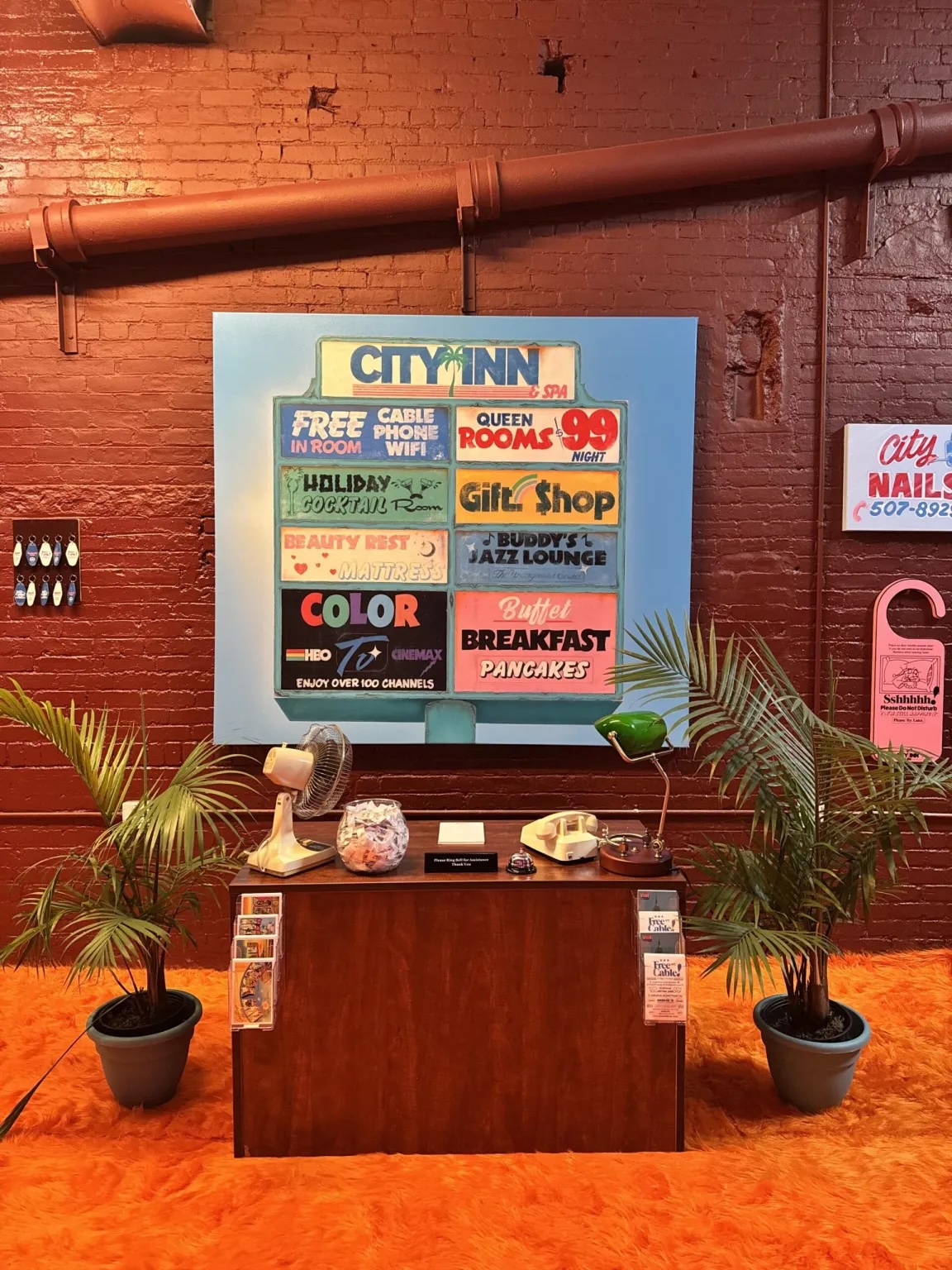
Lucas Geor photo
From Greenpointers: Despite Williamsburg’s renaissance of hand-painted billboard ads (for better or worse), the art and artistry of the hand-painted business sign is sick and dying. But for at least one weekend in Greenpoint, this motif of Americana, the hand-painted sign, specifically the roadside motel sign, is very much alive and well.
“Everything was like ‘look over here!’ It’s so heavy in how it influences my painting practice, my design work, everything. It’s just like the way it catches your eye,” says Greenpoint artist Lucas Geor, while then pointing to a subtle patina on the edges of one of his sign paintings. “And also, these stains of time.”
Friday, December 12 is the opening reception of “Free Cable,” the solo exhibition of paintings by Lucas Geor that document and reimagine the vanishing culture of American roadside motel signage, including the show’s namesake and once ubiquitous “Free Cable and HBO” sign. In addition to his original paintings, Geor is presenting limited edition prints, one-of-a-kind sculptural objects, and exhibition merchandise.
Need a gift for a foodie? A local artist has painted nearly 40 Wichita restaurants
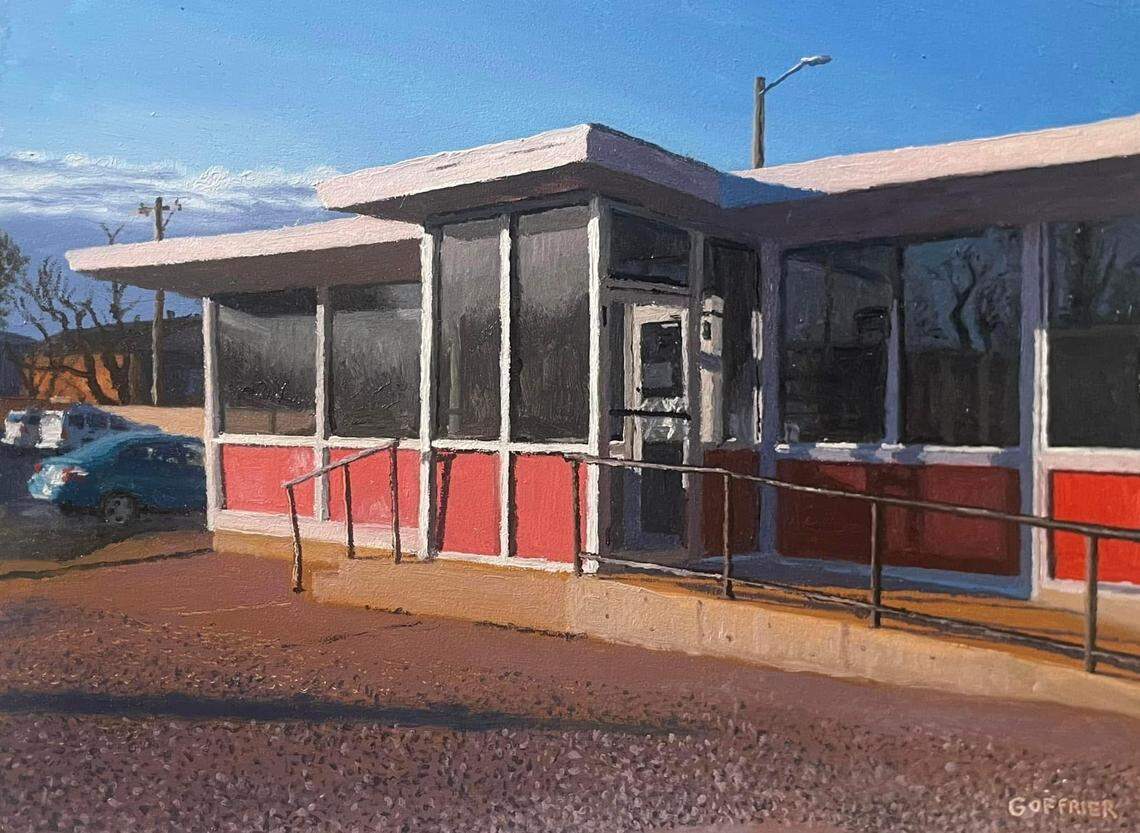
The Valentine Diner on North Broadway that was once home to Dyne Quik is now all boarded up. Painter Bill Goffrier captured the building before that happened. Courtesy Bill Goffrier
From The Wichita Eagle: He painted Jack’s North Hi Carryout before it closed and became a doughnut shop. He painted Mead’s Corner before it was torn down. He painted the Valentine Diner on North Broadway before its windows were all boarded up. He painted Savute’s Italian Ristorante at the request of the Savute family. He painted Ty’s Diner because he loved the way the sunlight warmed the building’s red bricks. And he painted Old Mill Tasty Shop just because he wanted to.
In all, Wichita artist Bill Goffrier — well-known for the paintings of Wichita landmarks he does as part of his “Authenti-City” series — has created nearly 40 oil paintings featuring Wichita restaurants.
How the Architecture Style You Never Heard of DOMINATED Google This Year

DARRELL INGHAM//GETTY IMAGES
From Good Housekeeping: In 2025, it feels virtually impossible to go through our daily routines without Googling something. After all, the search engine is where we go to find the latest “it” products, peruse paint colors, and, of course, enhance our interior design IQ. So when Google released its 2025 Year in Search report this morning, we were curious to see which design terms were trending this past year.
While the report is packed with viral products, styling advice, and tips for buying new appliances, we were shocked to see the most-searched architecture style was “Googie.” If you haven’t heard of Googie-style architecture before, you’re not alone. When we chatted with Alessandra Wood, a design historian in San Francisco, she confessed she hasn’t had that architecture style on her radar for years.
Meet Todd Matuszewicz: This Fall Grad Found His Encore Career After 60 at CU Denver—Saving Neon Signs

From UCDenver: When Todd Matuszewicz learned to bend tubes of glass to be filled with neon gas, he felt like he was doing tai chi. He was a craftsman, relaxed in the flow of his work. “You’re in fires and you’re standing up and you’re making little, tiny movements and adjustments all day long,” Matuszewicz said. “It’s so beautiful.”
To Matuszewicz, each neon sign—made by him or someone else—illuminated a small part of a city and anchored our memories of that place. Signs, like the neon chef with a mid-pancake flip on the facade of Pete’s Kitchen on East Colfax Avenue, make our communities feel like they’re ours.
Now, Matuszewicz is transitioning from creator to defender. Thanks to his participation in CU Denver’s Change Makers program and the master’s degree he’s earning from the Dana Crawford Preservation Program at CU Denver this fall, Matuszewicz is making progress toward his goal of cataloging and protecting Colorado’s many historic neon signs. “The amount of support I’ve got, and the avenues that that support has come from, is just unattainable without the university,” Matuszewicz said.
Once a California staple, rooftop doughnuts are disappearing

Donut King 2 in Gardena, Calif., on Dec. 2, 2025. Jessie Alcheh/SFGATE
From SFGate: The orb rises from the horizon, an imposing presence that beckons those within its gaze to come closer. Planes, flying low, seem ready to pierce the ring. It is, of course, the big Southern California doughnut, planted on the rooftops of pint-sized shops in sprawling south Los Angeles County.
One of these joints, Randy’s Donuts, has become an icon of the city. Located in Inglewood, just a stone’s throw from LAX, the giant doughnut hoisted atop the drive-thru stand — hovering at more than 32 feet in diameter — has been a favorite of Hollywood productions for years. You may know it from, among other things, “Arrested Development,” which featured a memorable scene of character Buster Bluth trying in vain to chomp the giant pastry after an accidental brush with marijuana.
Drive around long enough in LA County and you’ll notice big doughnuts cropping up all over. There’s Donut King II, in Gardena, advertising “hot, fresh” treats on its mammoth sign. Over in La Puente, you can actually drive into the center of two huge doughnuts at the Donut Hole. Some spots that were once doughnut shops now sell other items, but keep the baked good on their roof still, for old times’ sake.
$71,505 grant to restore Glancy Motor Hotel neon sign in Clinton

Friends of Oklahoma Route 66 Museum receive $71,505 grant to restore and install Glancy Motor Hotel neon sign in Clinton. (Photo/Oklahoma Route 66 Museum)
From The Journal Record: CLINTON — The Friends of the Oklahoma Route 66 Museum in Clinton have received a $71,505 grant from the Route 66 Revitalization Grant Program to restore the Glancy Motor Hotel neon sign.
The sign, the only remaining piece of the former motel, will be displayed at the museum once repairs are complete.
The Glancy Motor Hotel opened in 1950 and served as a popular stop for Route 66 travelers until it closed in the 1970s. The building was demolished in 2023, but the neon sign was preserved by the City of Clinton.