


Ruminating on the Ruins of Fort Dells
By Kevin Patrick
Excerpted from “The Lingering Ghost of Fort Dells: A Western-Themed Amusement Park in Wisconsin Dells” by Kevin Patrick. SCA Journal, Fall 2025, Vol. 43, No. 2.
Download Fall 2025 SCA Journal
I went searching for the ghost of Fort Dells and was surprised to find how much of it continued to linger in the weedy, overlooked margins of Wisconsin Dells. Bits of the old Western-themed amusement park survived from a time before the Dells remade itself into the Midwest’s waterpark mecca. Waterparks seem to be a complementary diversion to the scenic wonderland of sandstone cliffs and canyon-like gulches the Wisconsin River has carved at the edge of both the North Woods and the hilly Driftless Area.
…
Waterpark Wisconsin Dells moved beyond mid-20th-century America’s fascination with the mythology of the Old West in the 1980s, leaving Fort Dells marooned. Marginalized by changing times and demographics, the frontage part of the property was redeveloped for a McDonald’s and a Walgreens, but the back part was left for nature to redevelop. That’s where the ghost of Fort Dells lingers.
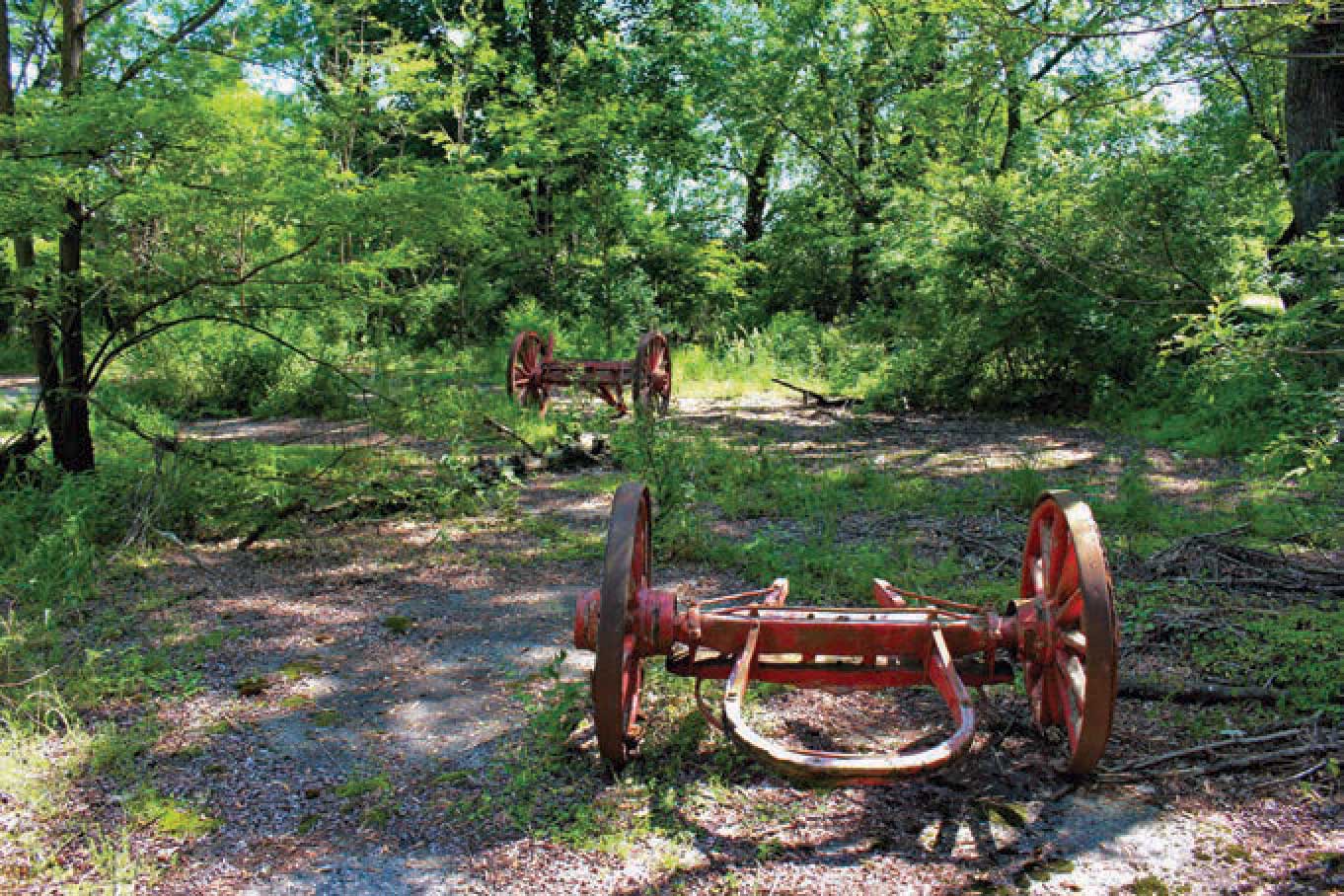
Abandoned wagon wheels on the site of Fort Dells’ Children’s Farm.
Tall grass, nettles, poison ivy, thorny bushes, honeysuckle, birches, and maple trees have recolonized the Hulburt Creek floodplain with an undulating mantle of greenery, through which peak rectilinear ruins, bits of paving, courses of foundation stone, and scattered litter are visible. At the edge of the creek, wooden posts lined a sandstone cliff that harbored the dark recesses of a fabricated cave holed through the steep-sided promontory. An old iron safe and its detached door lay toppled on the ground along with a moss-covered shoe. Two sets of red wagon wheels rested on a weedy patch of pavement.
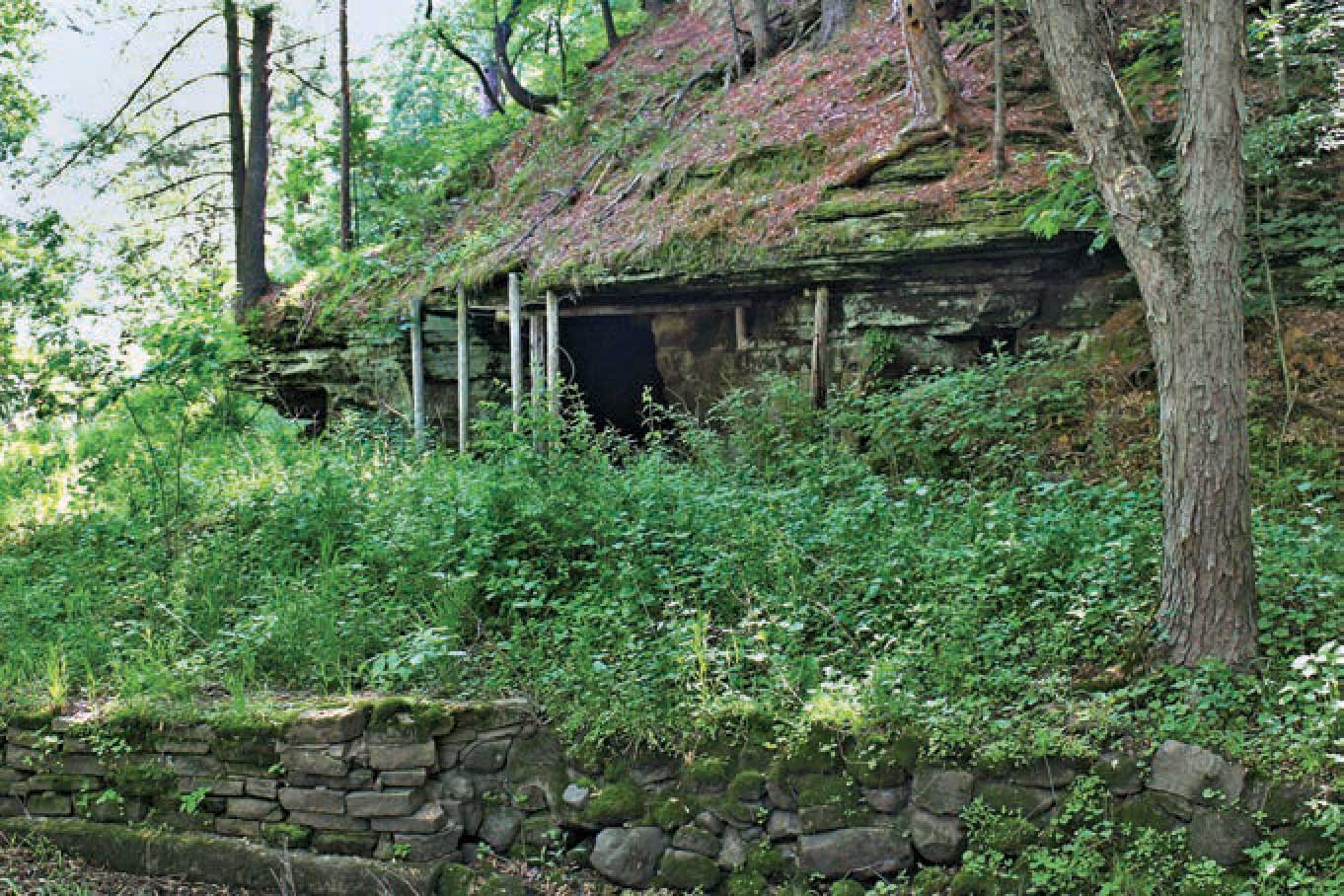
Fort Dells’ foundation stones, which edged the River of Adventure, and the entrance to the Big Bonanza Mine.
There is a romance to ruins that mirrors the arc of life from inception to the apogee of achievement, and then the inevitable fade to decay. The apogee of achievement for this nature-reclaimed wreckage was once a Dells anchor attraction that drew more than a quarter of a million visitors in its peak year of 1972.
…

The Robert E. Lee riverboat, the Kilbourn & Western train, and the Dells Fargo Stage Coach followed parallel paths along the margins of the park.
When I bushwacked my way onto the overgrown footprint of Fort Dells, I expected to find nothing. To my surprise, the floodplain nature of the site and the small size of the undeveloped parcel worked in favor of saving what ruins remain. Foundation stones border the waterless channel that once floated the Robert E. Lee steamboat. A weedy terrace between the channel and the sandstone bluff carried the Kilbourn & Western train to its recurring destiny with Black Bart.
The train itself was saved, restored, and continues to carry Wisconsin Dells tourists at Timbavati Wildlife Park. The Big Bonanza Mine survives as a cave strewn with old park litter, including an iron safe abandoned just outside the mine’s dark recesses.
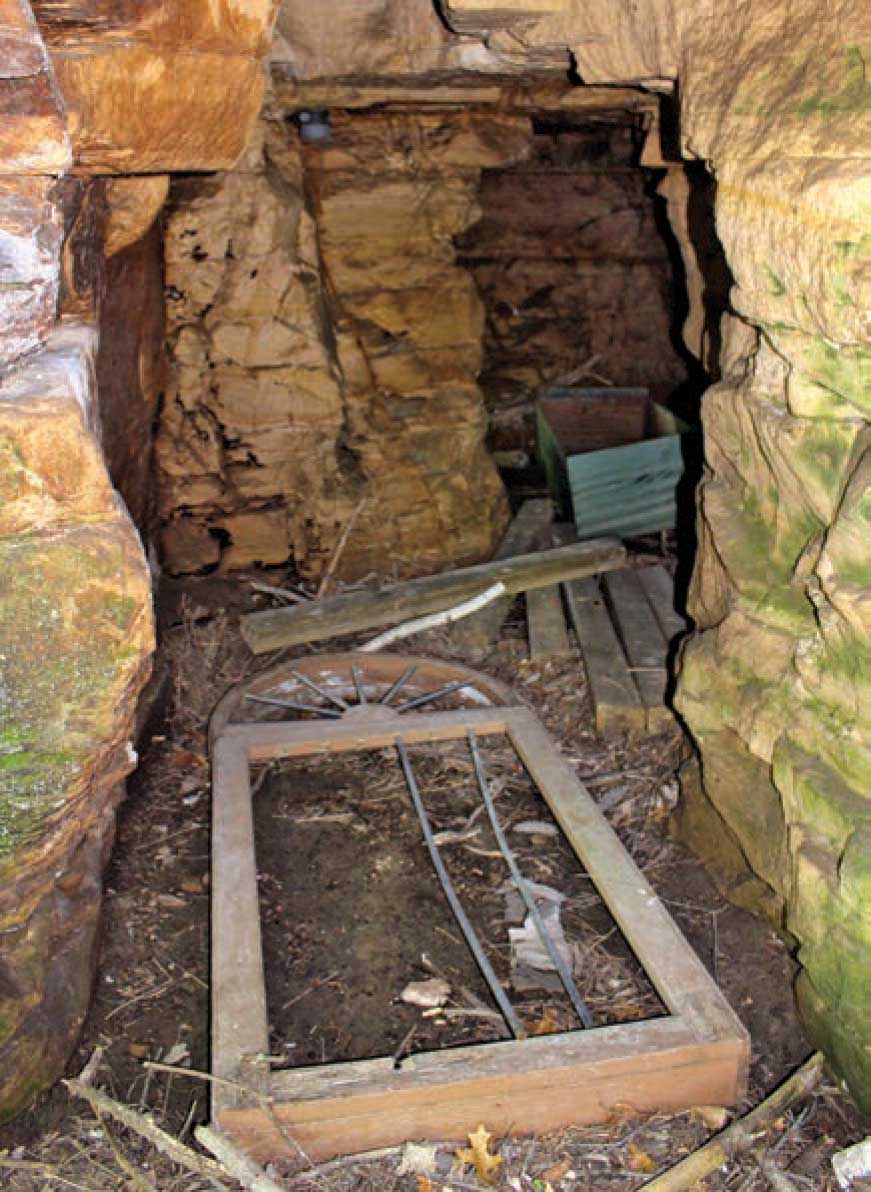
A Fort Dells bank teller’s window lies in the Big Bonanza Mine remake of Injun Joe’s Cave.
A pair of wagon wheels stand in the shade of maple trees that have partially reclaimed the Children’s Farm. Cleaned up and re-landscaped, the site has the potential to become a different kind of passive park, a history walk through a garden that reclaims the lingering ghost of Fort Dells.
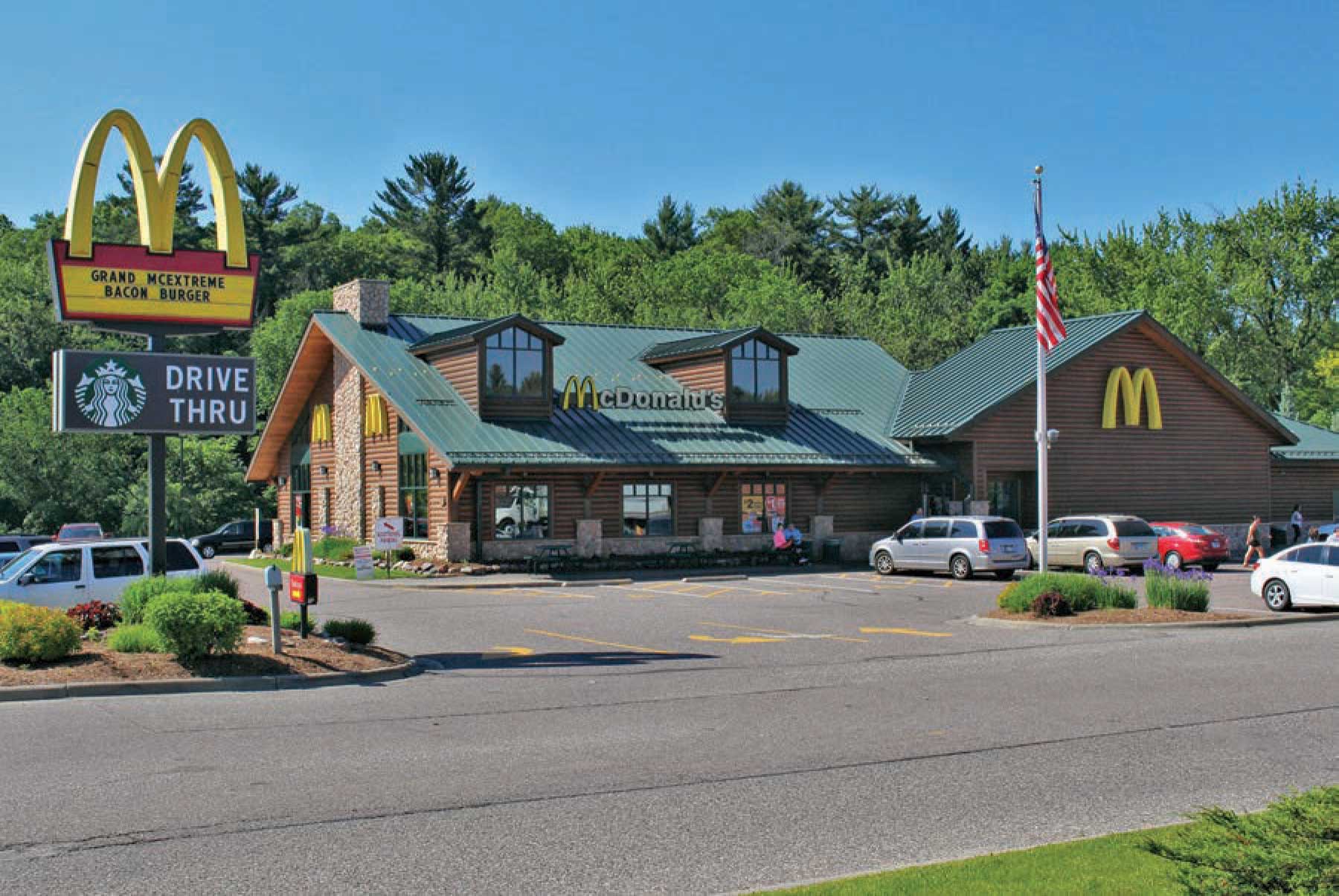
The log cabin McDonald’s built on the site of Fort Dells in 2002 is an homage to the old Western theme park attraction.
There’s more! To read the rest of this article, members are invited to log in. Not a member? We invite you to join. This article originally appeared in the SCA Journal, Fall 2025, Vol. 43, No. 2. The SCA Journal is a semi-annual publication and a member benefit of the Society for Commercial Archeology.
More Articles Join the SCA