


On-Site Leftovers from the
1964-65 New York World’s Fair
By Gloria R. Nash
The 1964–65 fair’s theme, “Peace Through Understanding,” focused on achieving world peace through global interdependence. Exhibits featured 80 nations, 24 states, and 45 corporations. After the fair closed, most pavilions were demolished. Some pavilions, such as those of the United States, DuPont, and Greyhound, waited for years to be repurposed but were eventually razed.
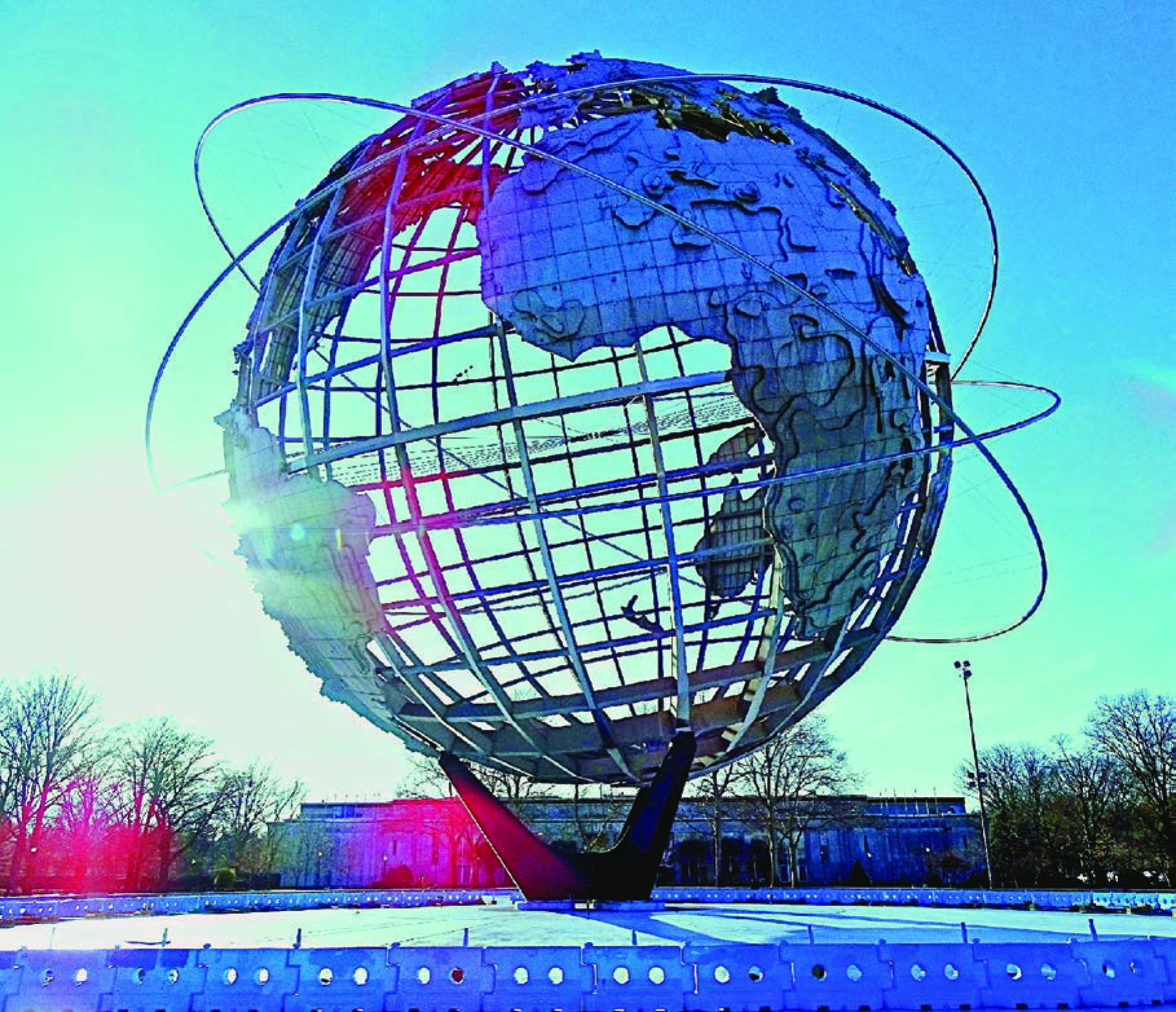
1964-65 New York World’s Fair Unisphere with Queens Museum in the background, 2024.
Some leftovers from the 1939–1940 fair were reused at the 1964–1965 fair and are still in use, including pathways, roads, two artificial lakes, Googie-style canopies that form both fairs’ main entrances, and walkways connecting transportation hubs.
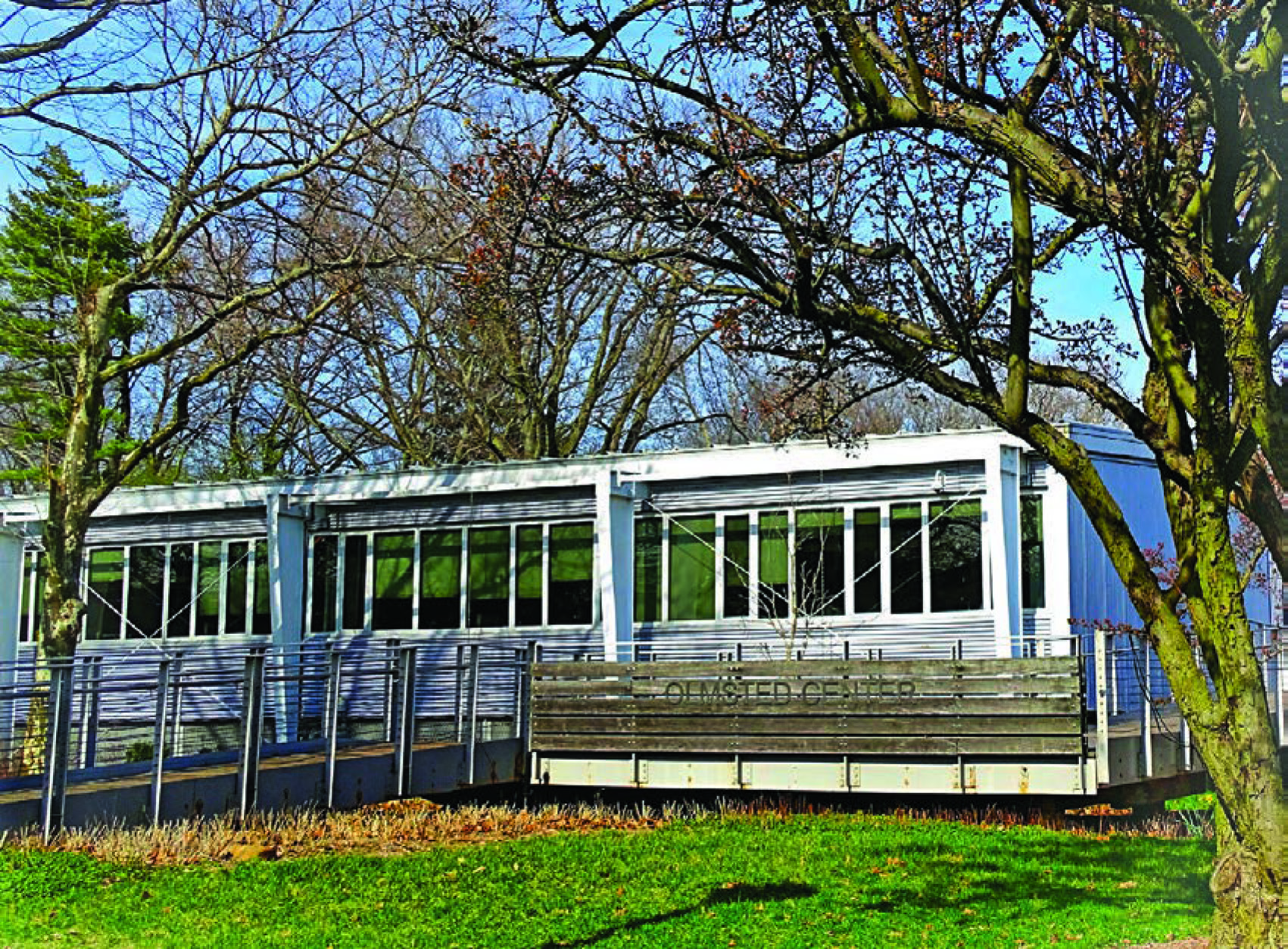

TOP: 1964-65 New York World’s Fair Forms in Transit, 2023. BOTTOM: 1964-65 New York World’s Fair Robert Moses Office Olmstead Center, 2023.
Remnants existing from the 1964–1965 fair include drinking fountains, benches, street markers, entrance pillars, garden markers, and a General Motors retaining wall. The Parks Department’s administrative offices in the Olmsted Center were once the headquarters for Robert Moses and his staff.
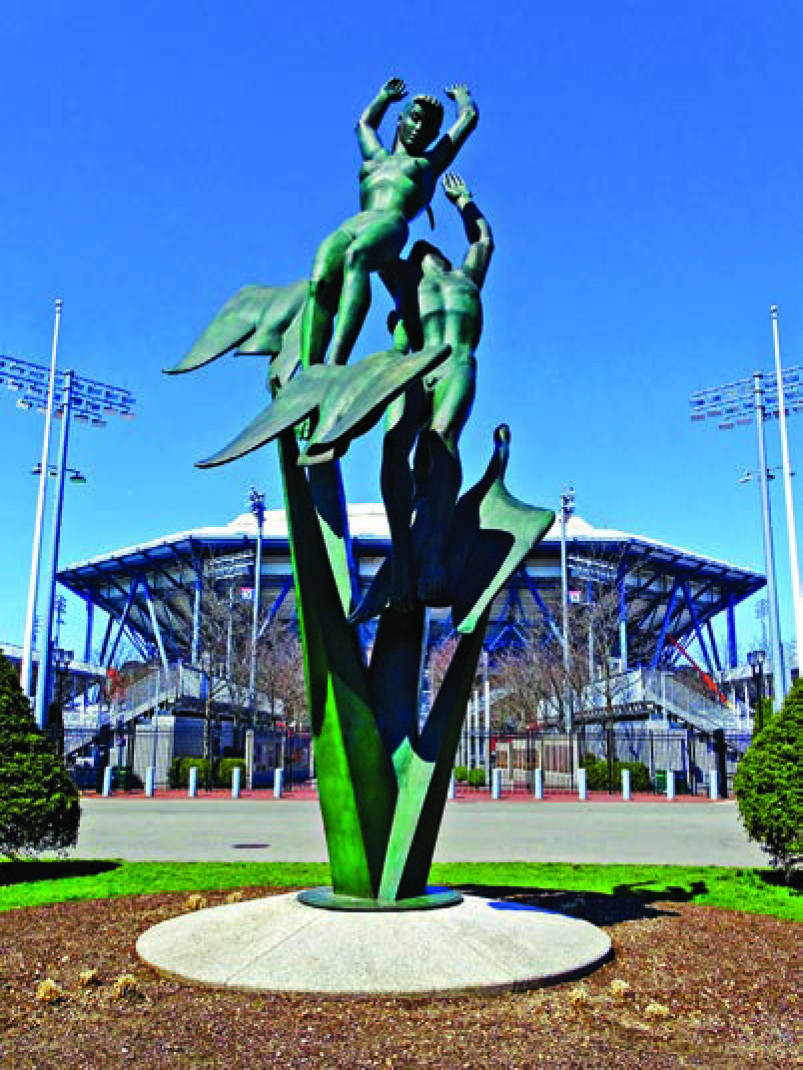
1964-65 New York World’s Fair Freedom of the Human Spirit, 2023.
Structures, such as the five sculptures still on-site, evoked the fair’s futuristic themes, where modernism meets the Space Age. The world’s largest sculpture of Earth, the Unisphere, sponsored by U. S. Steel, symbolized the fair and today represents the park and borough of Queens. Designed by Gilmore Clarke, it is located where the previous fair’s Perisphere stood. It is the only structure from two world fairs that New York City’s Landmarks Preservation Commission deemed landmark-worthy.
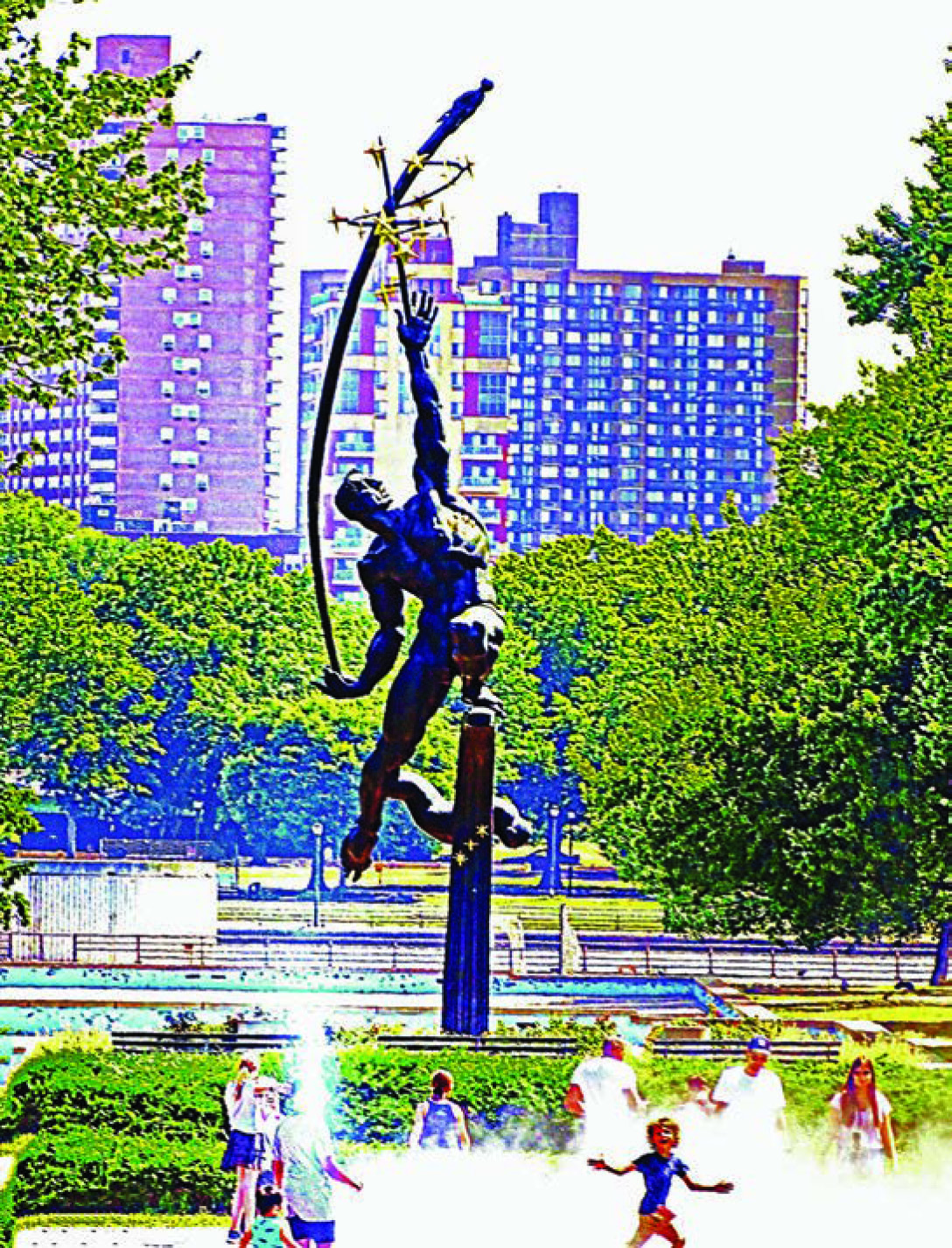
1964-65 New York World’s Fair mist garden with Rocket Thrower, 2022.
Donald De Lue’s impressive sculpture, Rocket Thrower, reaches for the stars, while Marshall Fredericks’ Freedom of the Human Spirit inspires earthly liberation. Forms in Transit by Theodore Roszak is a rocket in motion, whereas Free Form by Jose De Rivera is a steel curve pouncing like an eagle.
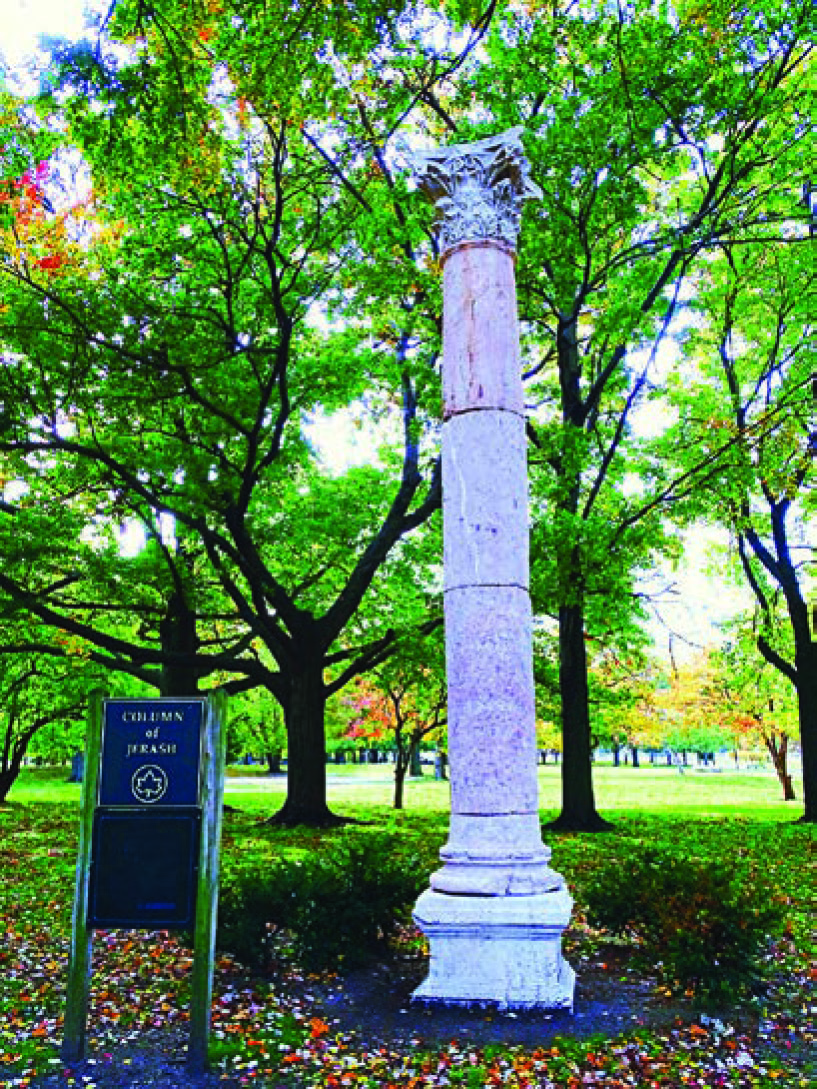
1964-65 New York World’s Fair Column of Jerash with plaque, 2022.
The fair featured nine spectacular fountains. “Fountains of the Fair’s” recently renovated mist garden sprays visitors with cooling water as it did six decades ago. The restored “Fountain of the Continents” surrounding the Unisphere operated annually at the U.S. Open until 2022. The “Astral Fountain” has been converted into a skateboard park. The “Fountain of the Planets,” once the largest fountain in the world, presented light shows and fireworks visible from miles away to residents, including me. Today, it sits abandoned and filled with garbage. All that remains of the neglected “Fountain of Progress North” and “Fountain of Progress South” are dried-up ruins.

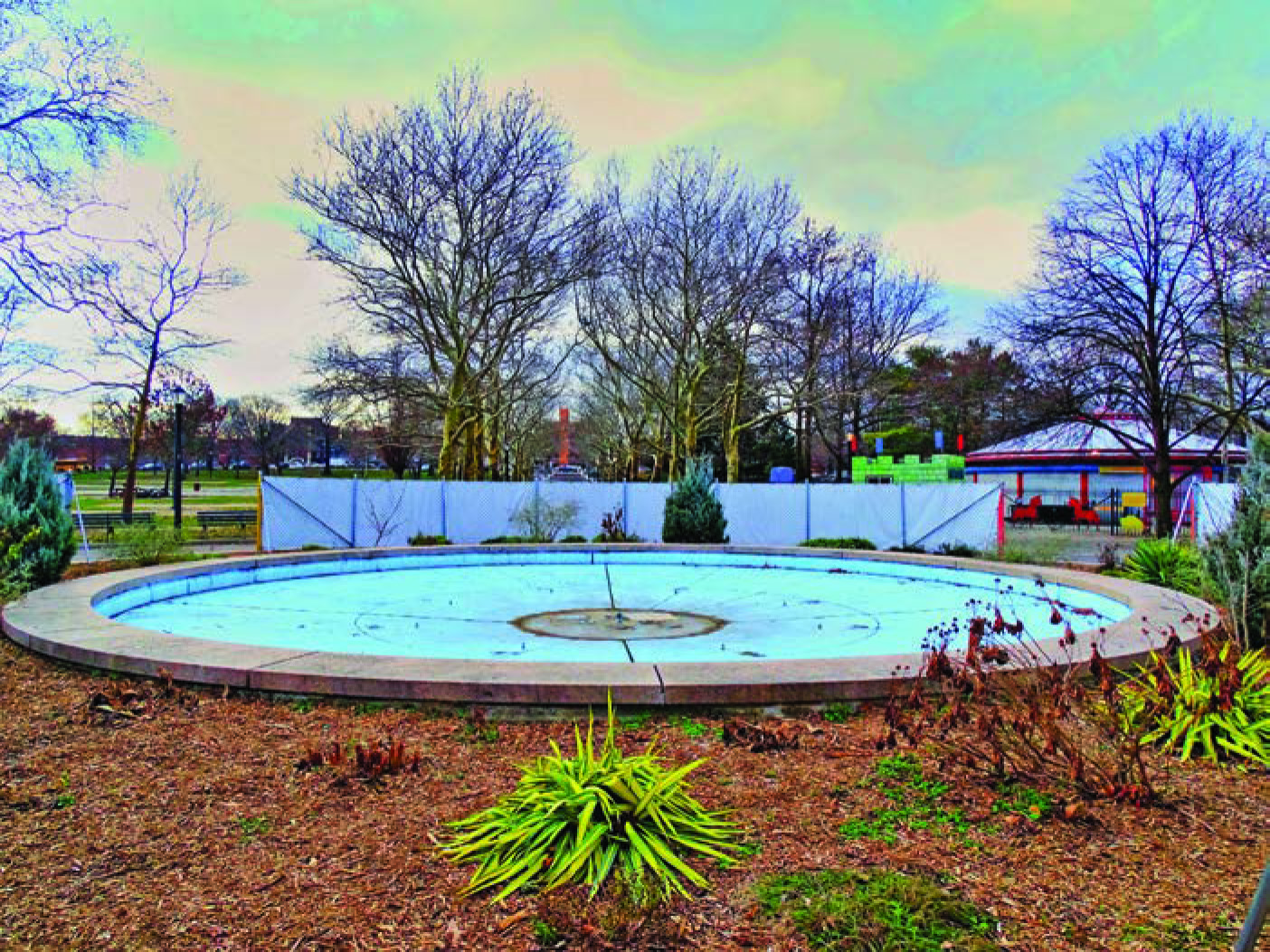
TOP: 1964-65 New York World’s Fair “Fountain of Progress North” with zoo aviary, 2023. BOTTOM: 1964-65 New York World’s Fair “Fountain of Progress South” with Flushing Meadows Carousel, 2024.
ABOUT THE AUTHOR: Gloria R. Nash grew up a block from a Howard Johnson’s, known as the “Queen of the Chain” in Rego Park, near the 1964–1965 New York World’s Fair. That sparked her lifelong passion for writing and photographing mid-century styles. While living in California and Las Vegas, her newsletter, For Here or To Go, attracted collectors nationwide. Returning to Manhattan, she learned website construction to create collectibles sites. Commemorating the 60th and 85th anniversaries in 2024 of the fairs, she wrote, photographed, and published Looking Back at the Future: Photographing Vintage Leftovers of New York’s World’s Fairs. She is currently working on Part 2 of this pictorial series.

1964-65 New York World’s Fair Post Office Pavilion poster at Queens Museum, 2023.
There’s more! To read the rest of this article, members are invited to log in. Not a member? We invite you to join. This article originally appeared in the SCA Journal, Fall 2025, Vol. 43, No. 2. The SCA Journal is a semi-annual publication and a member benefit of the Society for Commercial Archeology.
More Articles Join the SCA